Laurinda Ho's Rare Family Photo Breaks the Chinese Internet
The Chinese internet lost its collective mind this week over a photograph. Not an AI-generated deepfake, not a robot doing backflips, not a Douyin (抖音) livestreamer crying about product margins — just a simple family portrait from one of Asia's wealthiest dynasties.
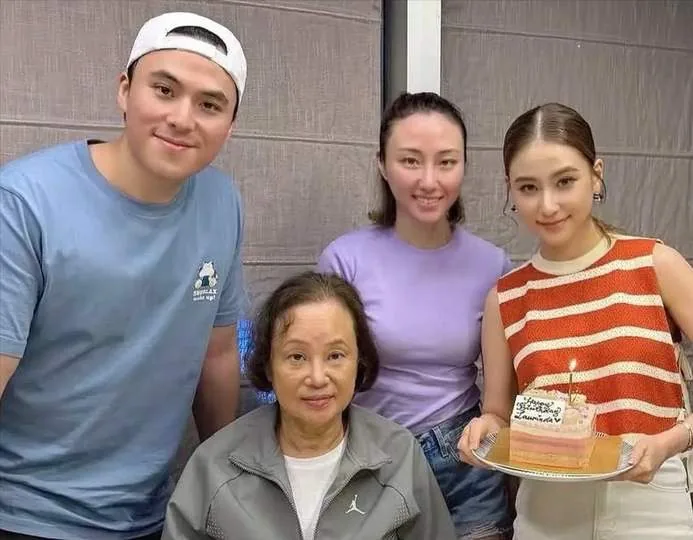
何超莲 (Laurinda Ho), daughter of the late Macau casino mogul Stanley Ho (何鸿燊), posted what Chinese media breathlessly dubbed a rare "三房全家福" — a complete family photo of the third wife's household. The Toutiao (今日头条) hot board registered over 1.2 million engagements, making it one of the top trending stories across mainland platforms.
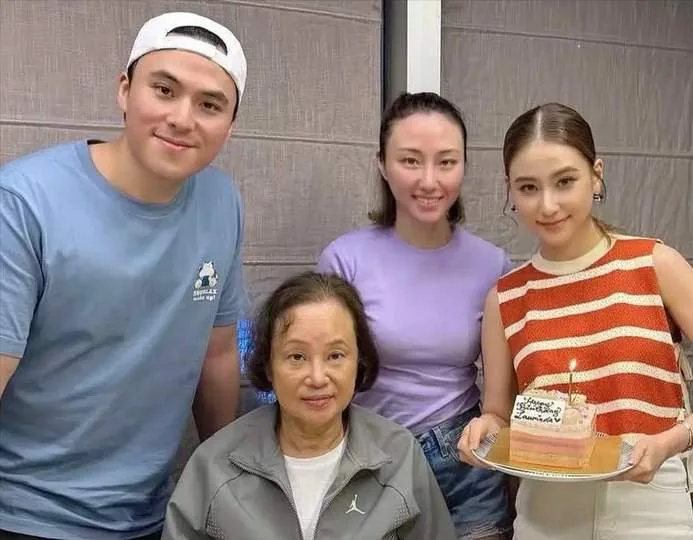
Let's break down why this matters, because it reveals something fascinating about how wealth, family drama, and social media collide in today's China.
The Ho Family Dynasty: A Quick Primer
Stanley Ho, who passed away in 2020 at age 98, essentially built modern Macau's gambling industry. For four decades, his SJM Holdings held a monopoly on casino operations in the territory. But what captures the Chinese public's imagination isn't his business acumen — it's his extraordinarily complicated family tree.
Ho had four official wives (a practice legal in Hong Kong and Macau until 1971, with existing marriages grandfathered in). The "third wife" refers to Chan Yun-kung (陈婉珍), a former nurse who became Ho's companion in the 1980s. Together they had three children: Laurinda Ho (何超莲), daughter Ho Chiu-king (何超葭), and son Ho Yau-lung (何猷启).
The family dynamics read like a real-life succession drama — which, incidentally, Chinese audiences absolutely devour. Think "Succession" but with more wives, more children (17 acknowledged in total), and billions more at stake.
Why This Photo Hit Different
Here's what makes this seemingly mundane family portrait genuinely newsworthy in the Chinese context:
First, the Ho family's internal politics are legendary. The various wives' households — termed "房" (rooms/branches) — have historically operated as semi-independent fiefdoms within the larger empire. Public appearances by complete branches are rare, making each one a statement about unity, hierarchy, and succession.
Second, Laurinda Ho occupies a unique position in Chinese celebrity culture. Unlike many wealthy heirs who maintain studied anonymity, she has cultivated a public persona that blends high-society glamour with approachable relatability. She documents luxury travel, fashion, and lifestyle content across Chinese platforms, but also posts about instant noodles and street food. She married Chinese actor Dou Xiao (窦骁) in a lavish 2023 ceremony that generated weeks of trending content.
Third — and this is crucial — the post landed during a period of intense public anxiety about wealth inequality in China. When a single family photo can generate more engagement than policy announcements about economic stimulus, it tells you something about where the cultural conversation really lives.
The Mechanics of Viral Wealth
The numbers tell an interesting story. That 1.2 million Toutiao engagement figure doesn't exist in isolation. Similar stories about Ho family appearances routinely generate massive traffic across Weibo (微博), Xiaohongshu (小红书), and Douyin. The family functions as a kind of real-time soap opera for hundreds of millions of Chinese netizens.
This creates a feedback loop. Platforms algorithmically boost Ho-related content because it generates reliable engagement. Celebrity media outlets know this, so they assign reporters to monitor family members' social accounts around the clock. When something like this family portrait drops, the coverage becomes self-reinforcing — every outlet covering it makes other outlets feel they must cover it too.
The Chinese internet's obsession with ultra-wealthy families serves multiple psychological functions. There's aspirational viewing — studying how the impossibly rich live, dress, and vacation. There's Schadenfreude — following the inevitable family disputes and legal battles. And there's a kind of cultural anthropology, observing how traditional Chinese family structures adapt (or don't) to modern celebrity culture.
What This Says About Chinese Social Media Right Now
Several trends converge in this moment:
The first is the mainstreaming of "wealth content" (财富内容). Five years ago, overt displays of extreme luxury might have drawn criticism or even regulatory attention amid Beijing's "common prosperity" campaign. Today, the pendulum has swung back. Influencers flaunting Hermès bags and yacht vacations dominate Xiaohongshu feeds. The Ho family photo fits perfectly into this moment.
The second is the enduring appeal of family drama as content. While Chinese tech platforms pump billions into AI features and creator tools, the most reliably viral content remains fundamentally human: births, deaths, marriages, and quarrels among people whose last names carry weight.
The third is the peculiar position of Macau and Hong Kong elites in mainland Chinese popular culture. They're simultaneously admired and viewed as exotic — wealthy beyond imagination, yet operating under different social codes. The Ho family, straddling Macau, Hong Kong, and mainland entertainment circles, exists at the perfect intersection of these worlds.
My Take: We're All Watching Succession Now
Look, I get why this went viral. The Ho family is conducting a decades-long real-world drama that no algorithm could improve upon. Every family photo is read for clues about alliances. Every public appearance is parsed for signals about business succession. Laurinda Ho posting a complete family portrait isn't just sharing a memory — it's a statement that the third branch is intact, united, and relevant.
But beneath the gossip, there's something telling about China's current mood. When economic uncertainty drives daily conversation, when youth unemployment remains a sensitive topic, when the property market continues its painful correction — the sight of one of Asia's wealthiest families posing for a cheerful portrait becomes more than celebrity content. It becomes a Rorschach test.
Some see aspiration. Some see inequality made flesh. Most see a distraction they're happy to click on.
The algorithms, as always, know exactly what they're doing.