Andy Lau's Wife Spotted at Supermarket, China's Internet Explodes
Here's what's occupying 1.4 million brains on the Chinese internet right now: Carol Chu (朱丽蒨), the notoriously private wife of Hong Kong superstar Andy Lau (刘德华), was reportedly spotted by a random shopper pushing a cart through a supermarket. That's it. That's the entire story. And Toutiao (今日头条) users cannot get enough.

Let me explain why this utterly mundane non-event reveals something genuinely fascinating about Chinese digital culture in 2024.
The Economics of "Spotted" Content
The original Chinese headline uses the word 被偶遇 (bèi ǒu yù), which translates roughly to "was accidentally encountered" — but has evolved into a entire content genre on Chinese platforms. Scroll through Douyin (抖音) or Xiaohongshu (小红书) and you'll find thousands of posts with this exact framing: "Spotted [celebrity] at [mundane location]." It's spawned a minor influencer economy of people who position themselves in upscale Beijing malls or Shanghai grocery stores hoping to bump into someone famous and harvest the engagement bounty.
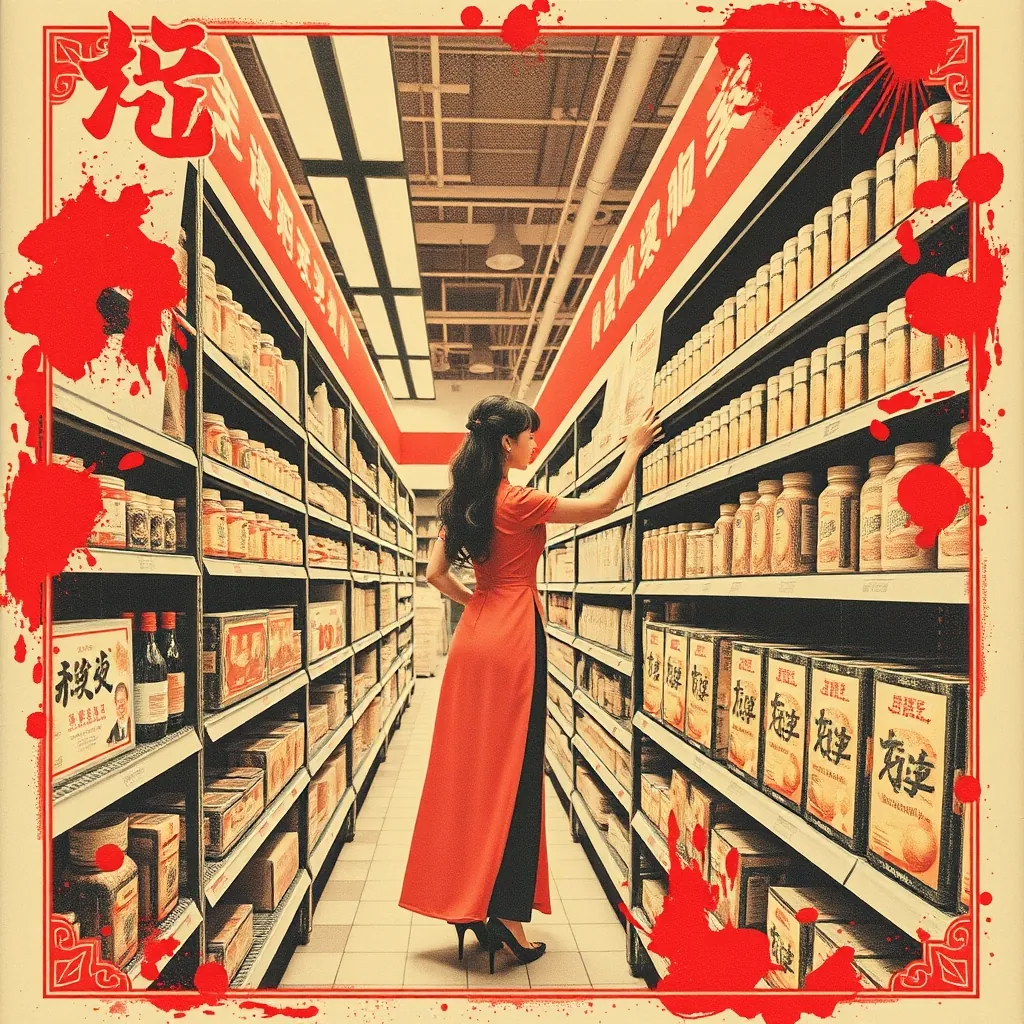
The magic formula is always the same contrast: someone wealthy and glamorous doing something aggressively normal. Carol Chu at a supermarket hits every noteshe's married to one of the most famous men in Asia, worth an estimated $70 million, and she's allegedly standing in the condiment aisle comparing soy sauce brands like the rest of us peasants.
This specific story is rocket fuel because Andy Lau has spent decades projecting an image of untouchable celebrity perfection. His marriage to Carol Chu was kept secret for over twenty years. The man didn't even publicly acknowledge her existence until 2008. So every tiny glimpse into their actual domestic life becomes a kind of forbidden fruit for Chinese gossip consumers.
Why Supermarkets Hit Different
There's something uniquely powerful about the supermarket setting in Chinese viral content. We've seen this pattern repeatedly — when celebrities are caught at high-end restaurants or luxury boutiques, it generates maybe a brief ripple. But catch them at a 永辉超市 or a 盒马 and the internet loses its collective mind.
The supermarket is the great equalizer in Chinese urban life. Whether you're a tech billionaire from Tencent (腾讯), a livestream queen, or an office worker making 8,000 RMB a month, everybody needs to buy vegetables. When someone glimpsed Alibaba's Jack Ma at a convenience store in 2020, it generated similar viral hysteria.
Chinese netizens read these moments as authenticity tests. Does the celebrity buy premium organic produce or bargain brands? Are they wearing designer clothes or casual athleisure? Do they look relaxed or hunted? Every detail becomes a data point in an ongoing national conversation about wealth, relatability, and moral character.
The Paparazzi Pipeline Has Shifted
Here's what's genuinely new: ten years ago, this kind of photo would have come from a professional paparazzo working for a Hong Kong tabloid. Now it comes from a random person with a smartphone who uploads directly to Toutiao or Douyin.
The economics have completely flipped. Professional entertainment journalism in mainland China has been largely squeezed out by platform-native content creators who can monetize directly through engagement incentives. Why sell a photo to a magazine for 500 RMB when you can post it yourself and potentially earn thousands in platform creator rewards?
This has created a strange surveillance culture around public figures. Every trip to a grocery store becomes a potential content moment. Every celebrity meal at a hotpot restaurant might be filmed by the table next door. Chinese stars have adapted — some by retreating entirely from public spaces, others by deliberately staging "candid" moments that feel authentic.
The Andy Lau family is firmly in the retreat camp. They're known for extreme privacy measures, reportedly using decoy vehicles and varying their routines to avoid exactly this kind of exposure. Which, of course, only makes each sighting more valuable and more viral.
What 1.4 Million Hot Index Points Really Means
For context on that Toutiao hot index number — 1,447,135 engagement signals puts this story in the same weight class as major tech product launches or national policy announcements. A celebrity's wife buying groceries generated more platform attention than most AI model releases or startup funding rounds.
This tells you something important about where Chinese attention actually flows. Despite all the discourse about technology, innovation, and geopolitical competition, the Chinese internet's appetite for celebrity human-interest content remains bottomless. Platforms know this. Toutiao's algorithm didn't push this story to 1.4 million people by accident — it recognized the engagement patterns and amplified accordingly.
The commercial implications ripple outward. The supermarket chain mentioned (if identified) will see a traffic bump. Commenters will debate whether Carol Chu looks "aged" or "elegant," generating thousands of replies. Beauty bloggers will analyze her apparent skincare routine. Fashion accounts will identify her outfit pieces.
The Relatability Obsession
Underneath all of this is something distinctly Chinese about the relationship between fame and relatability. In American celebrity culture, stars often perform wealth and exclusivity — think Met Gala appearances, private jet Instagram posts, exclusive resort vacations. The fantasy is aspiration: you should want to be like them.
Chinese internet culture increasingly demands the opposite. Celebrities who appear too wealthy or too detached face backlash and accusations of being out of touch with ordinary people. The most beloved public figures in China right now are those who successfully project down-to-earth qualities while maintaining their star power.
Dong Yuhui (董宇辉) built an empire on this exact tension — a former English teacher who became a livestream-commerce sensation by being erudite but humble, successful but seemingly unchanged by wealth. When consumers can see themselves in celebrities, they invest emotionally and commercially.
Carol Chu at a supermarket fits this cultural script perfectly. She's unimaginably wealthy, connected to the most powerful entertainment machine in Asia, and yet she's apparently out there comparison-shopping for household essentials like a regular person. Whether this is actually true almost doesn't matter — the narrative satisfies a deep cultural appetite.
The internet will move on by tomorrow. Some new "spotted" moment will replace this one. But the pattern remains remarkably stable, and remarkably revealing about what Chinese digital culture actually values beneath all the surface noise.