China's 'Fighting TCM Doctor' Shi Ming Wins First UFC Bout
Something deeply unhinged and completely wonderful is happening in Chinese sports media right now, and it goes by the name Shi Ming (石铭) — a 30-year-old who spends her mornings prescribing herbal formulas and acupuncture needles and her evenings rearranging faces inside the UFC Octagon.
Shi Ming, dubbed the "格斗女中医" (literally "combat female Chinese medicine doctor") by Chinese media, just secured her first UFC career victory, and the Chinese internet is absolutely losing its mind. The story has rocketed to the top of Toutiao (今日头条) with over 1.1 million engagement signals, which is the algorithmic equivalent of everyone in China simultaneously spitting out their boba tea in disbelief.
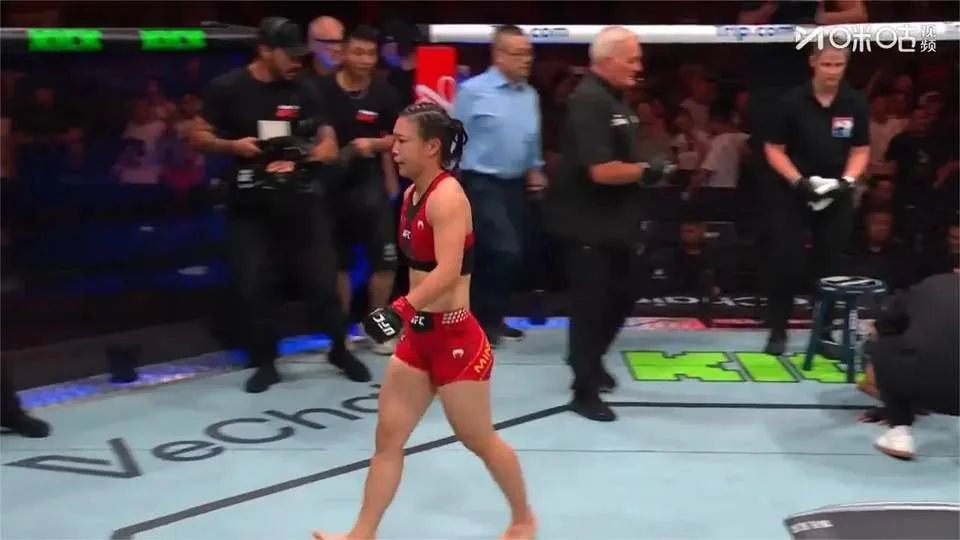
Let me paint you the picture, because the juxtaposition is chef's kiss: By day, Shi Ming works at a traditional Chinese medicine hospital in Kunming, Yunnan Province. She diagnoses patients with pulse readings and tongue inspections. She probably recommends goji berry tea. She likely has excellent bedside manner. Then she clocks out, wraps her hands, and steps into a steel cage to trade leather with professional violence-practitioners who want to turn her skeleton into a soup ingredient.
This is, frankly, the most anime character origin story imaginable, and Chinese netizens have recognized it instantly. The comments sections across Weibo (微博) and Douyin (抖音) are flooded with variations of "so she can heal you AND hurt you" — a observation that, while obvious, somehow never gets old when applied to a 5'4" woman who knows both the precise acupressure point for headache relief and the exact angle to render someone unconscious with a right hook.
The appeal is multilayered, which is why this story has transcended sports coverage and become a full-blown cultural moment. First, there's the raw novelty factor. UFC — still a relatively niche sport in China compared to basketball, badminton, or watching old men do taichi in parks at 5 AM — produces maybe a handful of Chinese fighters who break into mainstream consciousness. Zhang Weili (张伟丽), the current UFC Women's Strawweight Champion, blazed the trail. But Zhang is a full-time professional athlete. Shi Ming is something else entirely: a part-timer who apparently decided that being a licensed medical professional wasn't spicy enough, so she took up cage fighting as what we must assume is the world's most aggressive hobby.
Second, there's the TCM angle, which hits differently in a culture where traditional medicine still carries immense cultural weight and genuine mainstream acceptance. The idea that someone deeply embedded in one of China's oldest healing traditions is also participating in one of the most modern, brutal, and globally-mediated combat sports creates a cognitive dissonance that the Chinese internet finds irresistible. It's as if your gentle grandmother who brews chrysanthemum tea suddenly revealed she's been secretly competing in underground boxing rings. The meme potential is infinite and has been fully realized.
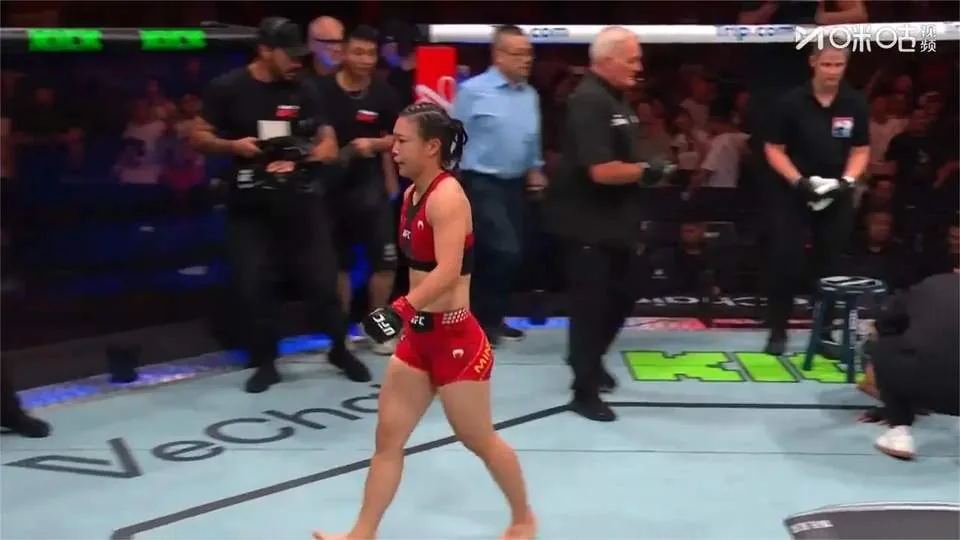
Third — and this is where it gets genuinely interesting from a sociological perspective — Shi Ming represents a version of female empowerment that resonates powerfully with young Chinese women specifically. Not the polished, celebrity-endorsed, brand-safe "girl power" that appears in Douyin beauty tutorials or Xiaohongshu (小红书) lifestyle posts. This is raw, unfiltered, physically dangerous, and deeply unconventional. She's not trying to be an influencer. She's trying to win fights while maintaining a career in a respected medical field. She exists at the intersection of tradition and modernity, softness and violence, healing and harm — and she refuses to pick a lane.
The numbers tell part of the story. Shi Ming reportedly holds a professional MMA record that includes fights across regional Asian promotions before earning her UFC contract. Her training regimen reportedly involves waking at dawn for hospital duties, training through lunch breaks, and evening sessions that would make most people cry into their post-workout protein shakes. This is not a vanity project. This is someone who has structured her entire existence around being simultaneously the most helpful and most dangerous person in any room.
Chinese state media has picked up the story with predictable enthusiasm — it's a soft-power narrative dream, combining traditional culture with international athletic achievement. But the organic viral spread suggests genuine public fascination rather than engineered engagement. The Toutiao numbers don't lie: over 1.1 million hot score signals means real people are clicking, sharing, and arguing about this in comment sections across the Chinese internet.
What Shi Ming's viral moment reveals about Chinese internet culture in 2024 is that novelty still cuts through the noise. In an attention economy saturated with manufactured drama from livestream commerce personalities, algorithmically optimized short videos, and the endless benchmark wars between AI companies like DeepSeek (深度求索) and Alibaba's Qwen (通义千问), a genuinely surprising human story still has the power to dominate the conversation. The Chinese internet didn't need a multi-million dollar marketing campaign to get excited about Shi Ming. It just needed someone doing something unexpected and doing it well.
The UFC, for its part, must be thrilled. The Chinese market remains a massive growth opportunity for mixed martial arts, and every homegrown fighter with a compelling narrative helps build the sport's cultural relevance. A TCM doctor who fights in the Octagon is the kind of story that converts casual observers into fans. It writes itself.
For Shi Ming, the first UFC win is presumably just the beginning. Whether she rises through the ranks or eventually returns to full-time medicine, she's already secured her place in the strange and wonderful pantheon of Chinese internet celebrities who achieved fame not through careful personal branding or algorithmic manipulation, but by being genuinely, improbably, delightfully unusual.
Now if you'll excuse me, I need to go find out if my acupuncturist has any secret fighting credentials. Something tells me I should be more polite during appointments.