No, China's Rocket Father Never Said Even Idiots Can Learn Calculus
Here's a sentence that's been haunting Chinese math-phobes for years: 「人再笨还学不会微积分吗」— roughly, "No matter how stupid you are, can you really not learn calculus?" — attributed to none other than Qian Xuesen (钱学森), the legendary aerospace engineer known as the "Father of Chinese Rocketry."
The only problem? He never said it. And Toutiao (今日头条) just put that fact-check on blast, pushing it to the top of the hot board with 1.87 million engagements and a bright red "refute rumor" stamp.
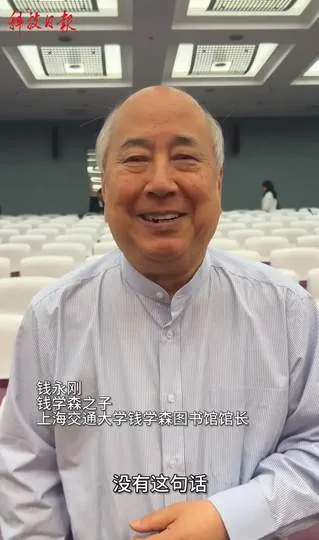
Let's talk about why this matters — because this isn't really about calculus, or even about Qian Xuesen. It's about the peculiar Chinese internet ecosystem where fake inspirational quotes from dead scientists become motivational gospel, and what it reveals about education anxiety, platform fact-checking, and the cult of genius.
The Fake Quote Industrial Complex
If you've spent any time on Chinese social media — Weibo (微博), Douyin (抖音), Bilibili (B站), or Xiaohongshu (小红书) — you've encountered this genre: the falsely-attributed motivational quote. Usually formatted as a classy black-background image with white text, sometimes with a portrait photo of Albert Einstein looking contemplative. The formula is simple: take a famous scientist, invent a maxim that sounds vaguely wise, and watch it get shared by every study-account influencer and exam-prep blog on the platform.
The fake Qian Xuesen calculus quote is a perfect specimen. It does triple duty:
It name-drops a national hero. Qian Xuesen is not just any scientist — he's the MIT- and Caltech-trained aerodynamicist who returned to China in 1955 and basically built the country's ballistic missile and space program from scratch. He's the Chinese answer to von Braun, except with a more dramatic backstory (five years under effective house arrest in the US before being traded for Korean War POWs). Invoking his name carries weight.
It weaponizes shame as motivation. The rhetorical question — "Can you really not learn calculus, even if you're stupid?" — isn't encouragement. It's a velvet-gloved slap. The implicit message: if you're struggling with math, you're not just bad at it, you're failing to live up to the minimum standard of human competence as defined by a national hero. This is peak Chinese parenting energy, distilled into a jpeg.
It feeds the math-anxiety-industrial complex. China's gaokao (高考) college entrance exam system means that math performance directly determines life trajectory. A single calculus question can be the difference between a top-tier university and... well, the ones nobody brags about. Quotes like this get traction because they exploit genuine fear.
Why This Particular Quote Went Viral — Again
The Qian Xuesen calculus quote has been circulating since at least 2018, popping up annually around exam season like an educational groundhog. But the current Toutiao moment is specifically about its resurgence, likely triggered by the AI boom.
Here's the connection: as Chinese AI models like DeepSeek (深度求索), Qwen/Tongyi (通义千问), and Kimi (月之暗面) compete to demonstrate reasoning capabilities, math benchmarks have become the new battlefield. When a model aces calculus problems, the subtext is that "if AI can do this, why can't you?" The old fake quote got recirculated in this context, probably by some content-farm operator who saw engagement potential.
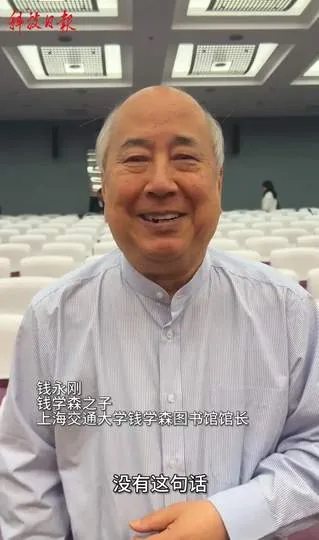
The irony is thick enough to spread on toast. We're in an era where Chinese AI labs are training models specifically to excel at mathematical reasoning, while simultaneously, fake quotes shaming humans for not being good at math are going viral. The machines are learning calculus; the humans are sharing motivational lies about it.
Toutiao's Fact-Check Game
The interesting meta-story here is Toutiao's labeling system. The "refuteRumors" (辟谣) tag is part of ByteDance's (字节跳动) broader content moderation infrastructure, which uses a combination of automated detection and human review to flag misinformation. When a piece of content hits the hot board with this label, it means the platform has actively decided to boost the correction rather than just delete the original.
This is a strategic choice. Chinese platforms have been under regulatory pressure to combat "rumors" (谣言) — a term that encompasses everything from health misinformation to fabricated historical quotes. Toutiao's approach of publicly debunking, rather than silently removing, serves dual purposes: it satisfies content-governance requirements and it generates engagement (because drama sells, even when the drama is "this thing you believed is fake").
The 1.87 million hot score suggests the strategy is working. People love a debunking. Especially when it lets them feel superior to everyone who shared the fake quote.
What Qian Xuesen Actually Thought About Math
For the record, Qian Xuesen — who genuinely was one of the most brilliant minds of the 20th century — never said anything resembling "even idiots can learn calculus." What he did advocate was systems engineering and interdisciplinary thinking. His actual philosophy was closer to: technical mastery requires dedication, proper methodology, and institutional support. Not shame.
He also wrote extensively about the importance of arts and creativity in scientific thinking — he married opera singer Jiang Ying (蒋英) and credited musical training with enhancing his engineering intuition. Somehow that quote never makes it onto the motivational posters.
The Bigger Picture: Why We Invent Wise Dead People
The fake Qian Xuesen quote is part of a universal human tradition — the apocryphal Einstein quote, the fabricated Buddha saying, the imaginary Confucius proverb. But in China's high-pressure educational environment, these fake quotes do real psychological work. They externalize the pressure: it's not me telling you that failing calculus makes you subhuman, it's Qian Xuesen.
In the age of AI-generated content, expect this problem to get worse before it gets better. When anyone can generate a plausible-sounding quote attributed to anyone, the fake-quote industrial complex will industrialize further. The platforms will need better fact-checking tools — and perhaps Chinese AI models will eventually be trained to debunk quotes from Chinese scientists.
Until then, let this be your guide: if you see a famous scientist saying something suspiciously punchy on social media, assume it's fake. Especially if it makes you feel bad about calculus.
The real Qian Xuesen had better things to do than shame you about math. He was busy building rockets.