Rare Earth Chokehold: China's Dirt Strangles Japan's Titans
The headline ripping through Toutiao (今日头条) right now doesn't bother with subtlety: 「一把中国土卡死日本两大巨头」— "A handful of Chinese soil chokes off two Japanese giants." Trending at over 7.3 million heat units, it's the kind of nationalist-tinged industrial pride story that Chinese social media devours — and it reveals something the Western tech press consistently underestimates about where real leverage sits in the global supply chain.
Let's decode the subtext. "中国土" — Chinese dirt — is almost certainly referring to rare earth elements (稀土), the unglamorous minerals that make virtually all modern technology function. China processes approximately 60-70% of the world's rare earth supply. In certain heavy rare earth categories — the ones that matter for high-end electronics — that figure pushes toward 90%. When Beijing adjusts export controls, the tremor reaches Tokyo within hours.
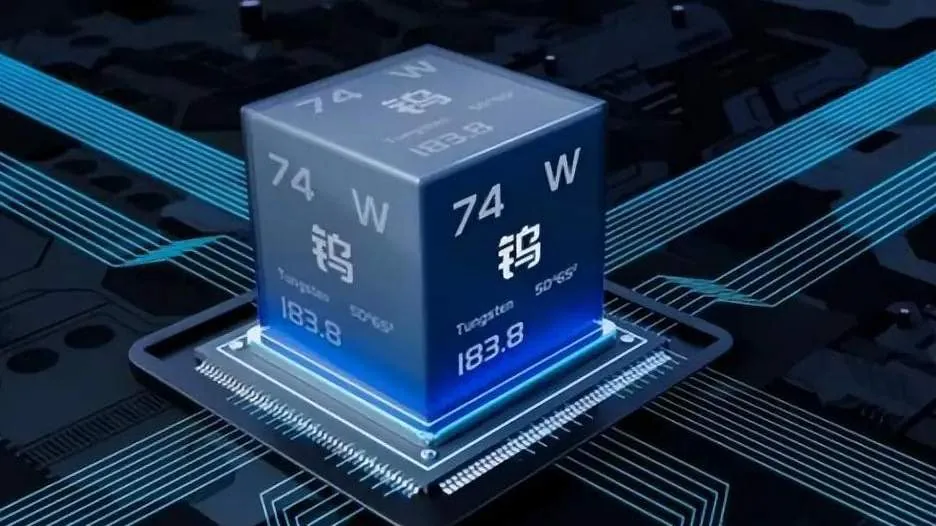
The "two Japanese giants" referenced here are likely major electronics or advanced materials conglomerates — companies in the orbit of Sony (索尼), Panasonic (松下), TDK, or Murata Manufacturing. These are firms whose products depend on Chinese-processed neodymium, dysprosium, terbium, and other elements that consumers never think about but absolutely cannot live without. Neodymium magnets make your earbuds vibrate. Lanthanum is in camera lenses. Europium and yttrium light up displays. Gallium — technically not a rare earth but bundled into recent Chinese export restrictions — is essential for the RF chips powering 5G infrastructure.
Here's the thing that gets Chinese netizens absolutely buzzing: Japan spent the 1980s and 1990s as the undisputed emperor of consumer electronics, treating China as a convenient source of cheap labor and raw ore. The supply chain has now inverted in a way that would have seemed absurd thirty years ago. Japanese tech titans depend on Chinese mineral processing to build their premium products. The dirt has become the crown jewel.
This isn't hypothetical drama. In 2023, China imposed export license requirements on gallium and germanium — two materials essential for semiconductors, fiber optics, and advanced sensors. Prices spiked globally. Japanese trading houses scrambled. In 2024, antimony — critical for flame retardants, lead-acid batteries, and certain military applications — received the same treatment. Each restriction sent ripples through supply chains that technologically sophisticated economies had assumed were permanently stable.
China didn't stumble into this dominance. It was a deliberate, multi-decade industrial strategy. The country consolidated hundreds of small, environmentally devastating rare earth operations into two major state-backed entities — China Northern Rare Earth Group (北方稀土) being the most prominent — with processing infrastructure and chemical engineering expertise that would take competitor nations years to replicate. The technical mastery required isn't trivial. Refining rare earths involves complex separation chemistry, radioactive waste management, and economies of scale that punish late entrants.
Japan knows this acutely. The Japanese government has identified 35 critical minerals for supply chain security. METI has poured billions of yen into domestic processing subsidies, partnerships with Australian miners, joint ventures across Southeast Asia, even experimental deep-sea mining exploration. Results have been underwhelming. Alternative supply chains exist in PowerPoint presentations and press releases more than in actual production tonnage.
The Toutiao comment sections reflect genuine patriotic satisfaction — not necessarily aggressive nationalism, but a swaggering pride in technical indispensability. There's a recurring sentiment: "Let them try to decouple." The schadenfreude is palpable when yet another country announces a "rare earth independence" initiative that fails to produce meaningful output.
What this reveals about Chinese internet culture is revealing: there's deep appreciation for industrial competence over flash. While Western tech discourse obsesses over app launches and valuations, Chinese social media users understand that controlling boring, dirty, difficult industrial processes is a form of power that venture capital can't replicate. The comments reference Baotou (包头), the Inner Mongolian city that processes much of China's light rare earths, with the same reverence that Silicon Valley reserves for Palo Alto.
From a competitive standpoint, the rare earth chokehold intersects directly with the AI and robotics revolution that Chinese companies are aggressively pursuing. Training large language models like DeepSeek (深度求索) or Qwen (通义千问) requires massive compute infrastructure. Building humanoid robots like Unitree's (宇树科技) H1 or Fourier's (傅利叶) GR-1 demands precision motors with rare earth magnets. The company that controls the materials controls the deployment economics of next-generation technology.
My take: The "weaponization" framing in Western media is overheated — China has used export controls surgically, not as a blanket cutoff. But the structural dependency is real and growing more entrenched, not less. Every new generation of technology requires more rare earth content, not fewer. The Japanese giants choking in this headline are canaries in a coal mine that includes every advanced manufacturer globally. The next decade of tech competition won't be decided by who writes the best code or designs the cleverest chip. It'll be decided by who controls the dirt — and right now, Chinese social media knows exactly who that is.