9 Million Views: Why China Can't Stop Watching This Dad
Toutiao's (今日头条) hot board is a chaotic place. You'll find AI model releases, celebrity divorce rumors, and videos of someone's grandma discovering firecrackers—all competing for eyeballs. But this week, a simple 30-second clip of a father and daughter has captured nearly 9 million views and counting, reminding us that sometimes the algorithm knows exactly what it's doing.
The headline says it all: 「女儿上台害羞 爸爸抱起女儿大方表演」 — "Daughter too shy to perform on stage, dad scoops her up and performs with confidence."

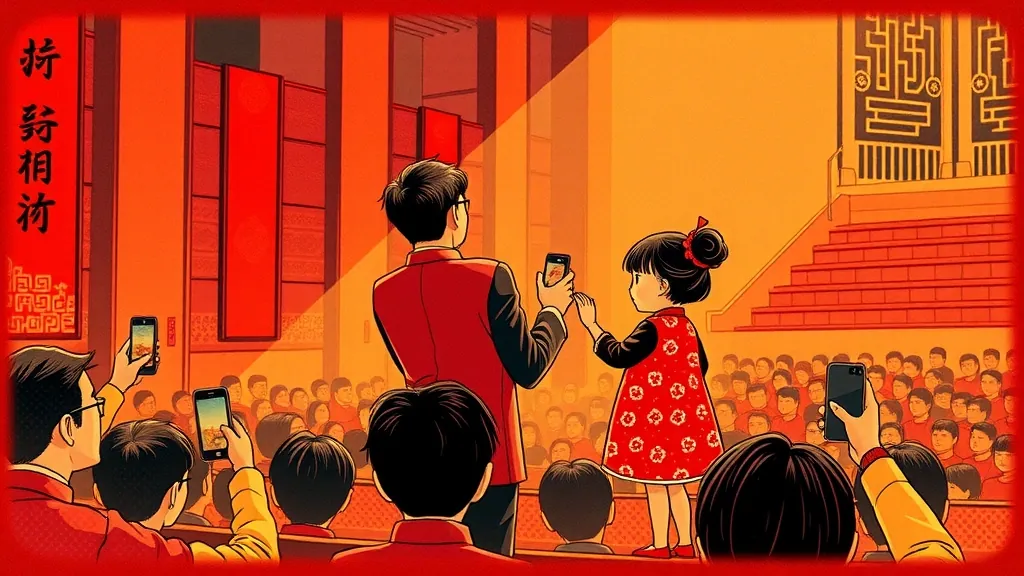
Here's what happened. A little girl, probably four or five, freezes on stage during some kind of school or community performance. The crowd waits. She clams up. Classic toddler meltdown moment. Then her father walks up, scoops her into his arms, and finishes the performance himself, daughter in tow, belting out whatever song or recitation was required with the unearned confidence of a man who has absolutely zero shame and zero stage fright.
The internet lost its collective mind.
Now, you might be thinking: "Okay, cute video, but 8.9 million views?" And you'd be right to be skeptical. But this is exactly the kind of content that detonates on Chinese platforms, and understanding why tells you something real about the emotional undercurrents driving Chinese social media right now.
The Rise of the "Shameless Dad" Archetype
Chinese internet culture has a complicated relationship with fatherhood. The traditional image of the Chinese dad—stoic, distant, emotionally unavailable, probably smoking a cigarette while reading the newspaper—has been slowly dismantled over the past decade by a new archetype: the goofy, engaged, slightly embarrassing father who will do literally anything for his kid's happiness.
This viral moment is peak "shameless dad" energy. The man didn't hesitate. He didn't look around nervously. He didn't try to gently coax his daughter off stage. He just grabbed her and performed. That's the move of someone who has achieved a level of paternal IDGAF that resonates deeply with Chinese netizens raised by the previous generation's emotionally constipated fathers.
The comments tell the story. On Toutiao and Douyin (抖音), where the clip spread, top comments included variations of: "This dad's emotional stability is incredible" (这爸爸情绪太稳定了), "I wish my dad was like this" (好羡慕有这样的爸爸), and the classic "He's not embarrassed, but I'm embarrassed for him" (他不尴尬,尴尬的就是别人). That last one is a whole philosophy of life compressed into a meme.
Why This Hits Different in 2024
There's a reason this particular clip went nuclear now. China is in the middle of a full-blown conversation about parenting anxiety, educational pressure, and what it actually means to be a good parent. The "involution" (内卷) discourse has parents competing to give their kids every possible advantage—piano lessons at age three, coding bootcamps for kindergarteners, the whole anxiety industrial complex.
Against that backdrop, a dad who just... picks up his kid and has fun? That's radical. That's almost countercultural. Chinese commenters aren't just watching a cute video; they're projecting an entire philosophy of parenting onto this man. He's become a stand-in for the relaxed, emotionally available father that millions of Chinese millennials wish they'd had—and that many are now trying to become.
The numbers don't lie. Parenting content consistently overperforms on Toutiao, which skews older and more heartland than Douyin or Xiaohongshu (小红书). Toutiao's algorithm knows that its core demographic—30-to-50-year-olds in tier-2 and tier-3 cities—will engage heavily with family content. A father-daughter moment like this is basically algorithmic catnip: emotionally resonant, culturally relevant, and shareable across family group chats on WeChat (微信).
The Toutiao Viral Formula
Let's get cynical for a second. Toutiao's hot board isn't a pure meritocracy of human interest. It's a finely tuned engagement machine that surfaces content designed to maximize time-on-app and emotional reaction. The viral formula goes something like this:
- Relatable setup: Every parent has seen their kid freeze up. Universal experience.
- Unexpected twist: Dad doesn't rescue her from the stage—he joins her on it.
- Emotional payoff: The performance, the crowd's reaction, the collective "aww."
- Commentary fuel: The video practically begs you to tag someone or share it with family.
This is the same formula that powers viral moments across Chinese platforms, from Bilibili (B站) reaction videos to Xiaohongshu parenting hacks. But Toutiao's version is stripped down to its essence: raw emotion, minimal context, maximum shareability.
What This Says About Chinese Internet Culture
Here's my take: the Chinese internet is starving for genuine human connection. Not the manufactured authenticity of livestreamers selling you hotpot base, not the performative vulnerability of influencers documenting their "self-care routines," but actual unscripted moments between real people. That's why random security camera footage, dashcam videos, and smartphone clips of ordinary moments keep going viral.
The dad-in-the-clip didn't ask to become a content creator. He was just being a dad. And in an internet ecosystem increasingly dominated by AI-generated content, scripted influencer dramas, and brand partnerships disguised as organic posts, that authenticity cuts through the noise like nothing else.
As Chinese AI labs like DeepSeek (深度求索) and Qwen (通义千问) push the boundaries of synthetic content generation, the irony is thick: the more artificial the internet becomes, the more valuable real human moments become. This father and daughter didn't need a content strategy. They just needed a stage and a willingness to be silly.
That's worth 9 million views. Probably more.