Woman Dunks on China's Viral Content Machine—Then Face-Plants
Here's the thing about Toutiao (今日头条)—China's algorithmically-powered news aggregator that makes TikTok look like a PBS documentary: it doesn't care about your geopolitical analysis or your deep thoughts on semiconductors. It cares about faces. Specifically, faces in the midst of wiping out.
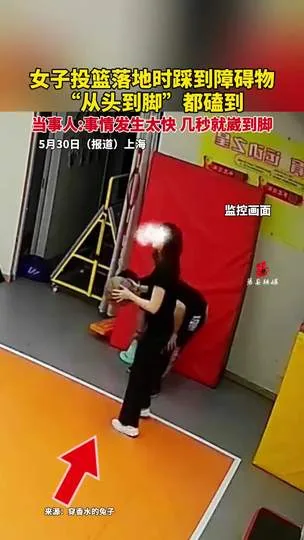
Exhibit A: the current hot-board champion, clocking over 1 million engagement points, titled simply 「女子投篮落地踩到障碍物磕伤」—"Woman shooting hoops lands on obstacle, gets injured." That's it. That's the whole headline. No political subtext, no celebrity meltdown, no tech billionaire drama. Just a woman, a basketball, and the cruel physics of landing on something you didn't see.
Why This Matters (Yes, Really)
Before you scroll past thinking this is just disposable content—the Chinese internet equivalent of America's Funniest Home Videos—consider what's actually happening here. This video hit Toutiao's hot board with over 1 million interactions. On a platform with 320 million daily active users. Where the algorithm rewards engagement velocity above all else.
What we're witnessing is the purest distillation of China's "下沉市场" (sinking market) content economy in action. This is the term for China's lower-tier city internet users—the 900 million people living outside Tier 1 cities who drive virality on platforms like Toutiao, Kuaishou (快手), and increasingly Douyin (抖音). They don't want nuanced analysis of DeepSeek (深度求索)'s latest model. They want relatable moments. They want schadenfreude. They want to watch someone eat pavement and think, "Better them than me."
The basketball angle is crucial too. Pick-up basketball has become a massive social phenomenon in China, particularly among young urban workers and college students. Courts in cities like Chengdu, Hangzhou, and Changsha are packed every evening with players filming their moves for social media. The sport has become deeply intertwined with content creation—you're not just playing, you're performing. And when performance meets reality? You get 1-million-hit viral content.
The Obstacle Problem: A Metaphor for Our Times
Here's what gets me: the "obstacle" in question. Chinese public basketball courts are notoriously chaotic. They're often multi-use spaces where you'll find elderly people doing tai chi in the corner, kids riding tricycles across the free-throw line, and random debris from nearby construction. The idea that someone left something on the court that a player could land on isn't surprising—it's inevitable.
This speaks to a broader tension in China's urban public spaces. As cities have modernized at breakneck speed, the demand for recreational infrastructure has far outpaced supply. Basketball courts double as parking lots. Running tracks become evening markets. Football fields transform into dance squares for "广场舞" (guangchangwu) grandmas. The result is a constant negotiation for space—and occasionally, a viral injury video.
The Engagement Anatomy of a Wipeout
Let's break down why this particular clip detonated on Toutiao:
Universal relatability: Everyone has tripped, fallen, or injured themselves doing something stupid. It transcends class, geography, and politics.
The "看了疼" (looks painful) factor: Chinese comment sections thrive on empathetic cringing. You'll see thousands of comments like "看着都疼" (just watching hurts) and "姐妹你没事吧" (sister, are you okay?). This drives engagement metrics through the roof.
Blame dynamics: The comments inevitably split into camps. Was it her fault for not looking? The court management's fault? The person who left the obstacle? This creates natural debate threads that keep the post alive.
Gender dynamics: A woman playing basketball—and getting injured doing it—triggers a specific response pattern in Chinese comment sections. You'll see everything from genuine concern to sexist "see, women shouldn't play sports" garbage to defensive "women can ball too" manifestos. It's a microcosm of gender tension that algorithms love.
The safety discourse: Every viral injury video becomes a proxy argument about public safety, liability, and China's alleged "甩锅文化" (blame-shifting culture). Who's responsible? The player? The facility? The government?
What This Tells Us About China's Content Machine
Here's my take: this video is more revealing about Chinese internet culture than any trending AI benchmark or robot dog video. It shows us what actually captures attention when algorithms are free from editorial judgment.
On Toutiao, content isn't curated by human editors with journalism degrees. It's curated by engagement data. And what engages humans most reliably? Other humans in moments of vulnerability. Not triumph—failure. Not success—pain. Not polished productions—raw, unfiltered reality.
This is the same impulse that drives "擦边" (borderline) content on Douyin, disaster tourism on Weibo (微博), and the endless reaction-video economy on Bilibili (B站). Chinese platforms have mastered the art of monetizing vicarious experience.
The 1-million engagement score tells us something else: China's internet audience is exhausted by complexity. After years of zero-COVID trauma, economic uncertainty, and information overload, people want simple content. A woman falls down. She gets hurt. We wince. We comment. We move on. No analysis required.
The Injury Economy
There's a darker angle worth noting. Content creators in China have increasingly staged "accidents" for views. The line between genuine injury and manufactured content has blurred completely. While there's no evidence this particular video was staged, the comment sections on Toutiao routinely accuse creators of faking injuries for clout.
This suspicion itself has become a genre of engagement—"is it real?" debates that keep posts circulating for days. It's a cynical loop: real content gets accused of being fake, fake content passes as real, and the algorithm doesn't care either way as long as you're clicking.
The Takeaway
A woman shot a basketball. She landed on something. She got hurt. Over a million people engaged with this content on China's largest news aggregator. This isn't a sign of cultural decay or intellectual decline—it's a reflection of what happens when you give 1.4 billion people algorithmically-curated feeds optimized for maximum engagement.
You get what you optimize for. And what Chinese algorithms optimize for, above all else, is the primal human instinct to look at something painful and think, "Glad that wasn't me."
Meanwhile, DeepSeek's latest model just dropped. Nobody clicked.