China's AI Boom Has a Boring Winner: Fiber Optics
Here's the thing about gold rushes: the people selling shovels usually make more money than the prospectors.
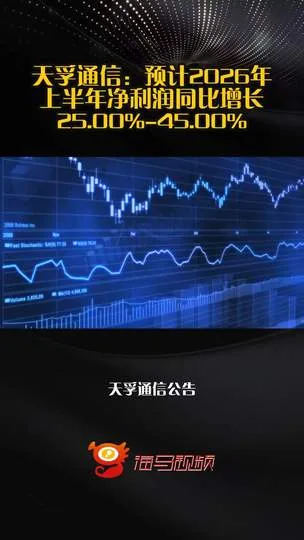
Case in point — Tianfeng Communications (天孚通信), a Suzhou-based manufacturer of optical communication components, just announced it expects net profit for the first half of 2025 to jump 25-45% year-over-year. The stock is a darling of the AI infrastructure trade on Chinese exchanges, and this profit guidance is essentially a smoke signal from inside the data center furnace.
The Picks-and-Shovels Play Nobody Talks About
While Western tech media obsesses over which Chinese AI lab released what benchmark score this week — DeepSeek (深度求索) dropping reasoning models, Qwen (通义千问) from Alibaba pushing out yet another parameter-count brag, Kimi (月之暗面) extending context windows — the real money is flowing into something far less glamorous: the physical plumbing that makes any of this possible.
Tianfeng Communications makes optical transceivers, connectors, and passive optical components. Translation: they build the tiny, precision-engineered parts that let data centers move massive amounts of information between servers at the speed of light. Without optical transceivers, you don't have AI training clusters. You have expensive space heaters running Linux.
So when Tianfeng says profits are up 25-45%? That's not a vague signal. That's a direct readout of how hard Chinese data centers are being built out right now.
Why This Number Actually Matters
Let me be specific about why a 25-45% profit growth forecast from an optical component maker is more telling than another model launch headline:
1. It's upstream validation. When ByteDance's Doubao (豆包) needs more compute, when Baidu's ERNIE needs more GPUs paired together, when Zhipu's GLM (智谱清言) scales up training runs — they all need more optical interconnects. Tianfeng supplies the invisible glue. Their revenue is a lagging indicator of AI compute demand that already happened.
2. Margins are expanding, not just revenue. The guidance specifically mentions net profit growth outpacing expectations. This means Tianfeng isn't just selling more units — they're pricing higher and capturing more value. That happens when customers (hyperscalers, AI labs) are desperate and supply is constrained. Sound familiar? It's the same dynamic playing out with NVIDIA in the West, just with Chinese companies and Chinese components.
3. The Huawei Ascend angle. As China pushes harder on domestic AI chips — Huawei's Ascend (昇腾) series, Cambricon (寒武纪) processors — the entire domestic supply chain gets pulled along. Tianfeng doesn't make chips, but their optical components sit right next to those chips in the same server racks. If Ascend adoption is accelerating, Tianfeng's order book fills up.
The Boring Infrastructure Layer Is Where China's AI Story Gets Real
Here's my opinionated take: Western observers consistently underestimate China's AI infrastructure buildout because they only watch the model layer.
They see DeepSeek release a model, benchmark it against GPT-4, write a hot take, and move on. They don't see the 100,000-GPU training clusters being stood up in Inner Mongolia. They don't see the optical transceiver shortage. They don't see the companies like Tianfeng running three shifts to meet demand.
The Toutiao (今日头条) hot board trend on this story — sitting at over 22 million heat score — tells you something too. Chinese retail investors and tech watchers aren't just following model launches. They're tracking the industrial base that determines whether China's AI ambitions are real or just PR.
Tianfeng Communications saying +25-45% profit is the manufacturing sector voting with its production lines: the AI infrastructure spending is real, it's accelerating, and it's domestic.
The Picks-and-Shovels Portfolio
Tianfeng isn't alone in this boom. The broader Chinese optical communications supply chain — companies like Zhongji Innolight (中际旭创), Eoptolink (新易盛), and Accelink (光迅科技) — have all been on runs. These are the companies supplying 400G and 800G optical transceivers that modern AI data centers require. The 1.6T generation is coming next.
If you want to understand whether China's AI push is hype or reality, don't just watch the model releases. Watch the optical component makers. Watch the data center construction permits. Watch the boring industrial companies whose order books tell you what's actually being built.
Tianfeng Communications just told you: it's being built. A lot of it. Right now.
The gold rush may be in AI models. But the shovel sellers are the ones booking real profits.