Tsinghua's Robot Just Got a Warehouse Job at SF Express
The Toutiao (今日头条) hot board is serving up peak Chinese internet energy today: 「清华教授造的机器人去顺丰打工了」 — Tsinghua professor's robot clocks in for a shift at SF Express. Over 970,000 heat score and climbing. And no, this isn't a gag. A robotics system developed under a Tsinghua University (清华大学) research group has been deployed inside an SF Express (顺丰) logistics sorting facility, doing the kind of repetitive, soul-crushing package-handling work that humans currently get paid roughly 4,000–6,000 RMB a month to do. Welcome to the most relatable robotics story of 2025 — a robot going 被裁员 is next, probably.
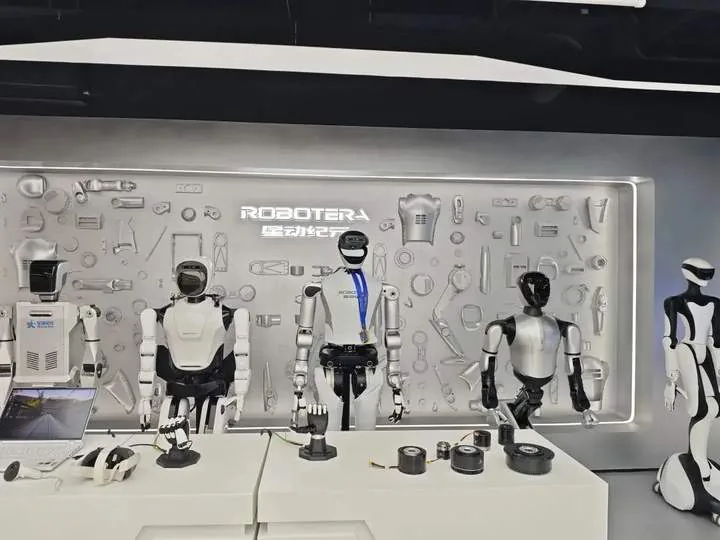
Let's be clear about what's actually happening here, because the framing is everything. The Chinese internet isn't saying a robot "was deployed in a logistics pilot program." It's saying a Tsinghua professor's creation went to 打工 — took a gig, punched a clock, joined the workforce. That verb, dǎgōng, is the same one used for China's hundreds of millions of migrant workers who leave their hometowns to labor in factories, on construction sites, and in warehouses. The internet is anthropomorphizing this robot with working-class language, and it's simultaneously funny, slightly melancholy, and deeply revealing of how normalized human-adjacent robotics has become in the Chinese popular imagination. Nobody's screaming about job-stealing terminators. They're cracking jokes about whether the robot gets a lunch break.
This matters more than the latest Western AI-doom op-ed for one simple reason: China isn't just building humanoid robots for YouTube demos. It's putting them to work in the unglamorous, high-volume, low-margin industries that actually run the world's second-largest economy. SF Express processes tens of millions of parcels daily. It is the circulatory system of Chinese e-commerce, connecting sellers on Pinduoduo (拼多多), Meituan (美团), and Douyin (抖音) Commerce to consumers across every county and village. If a Tsinghua-designed robotic sorting system — whether it's a fixed-arm manipulator, an AGV cart, or something more humanoid-adjacent — can meaningfully improve throughput or reduce labor costs at SF Express, the economics scale almost immediately across the entire logistics sector.
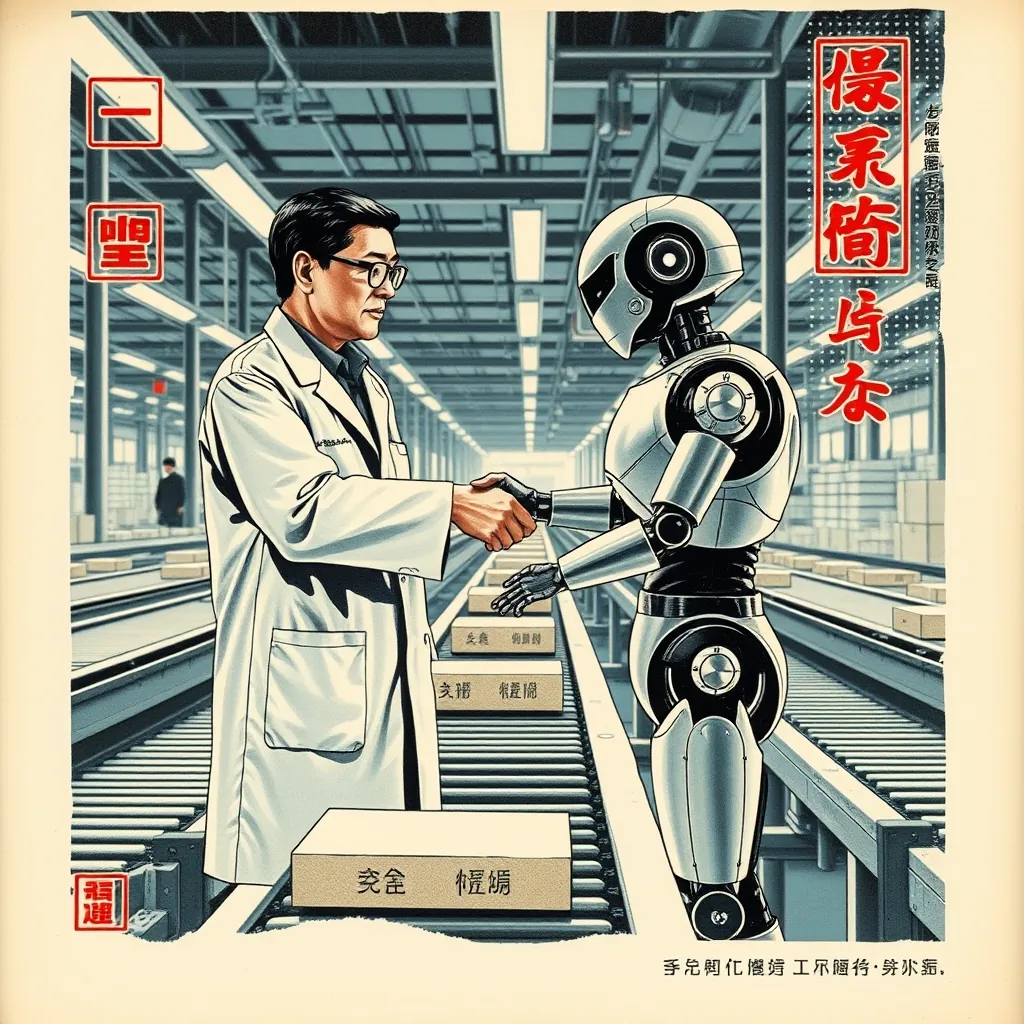
And here's the broader context the Toutiao headline is sitting on top of: China is in the middle of an absolute humanoid-robot arms race, and the academia-to-industry pipeline is firing on all cylinders. You've got Unitree (宇树科技) — whose H1 and G1 models have gone viral repeatedly for their eerie, fluid mobility — valued well into the billions and selling robot dogs to consumers. Fourier (傅利叶) is pushing its GR-1 humanoid into rehab and healthcare pilots. Agibot (智元), founded by a former Huawei wunderkind, is building general-purpose humanoids with serious venture backing. UBTech (优必选) has been at it for years and is publicly traded. XPeng's robotics arm (not the car side — banned topic, ask hype404) showed off IRON. EngineAI, Booster, Robot Era — the list goes on and on.
What makes the Tsinghua-SF Express story different is the banality. This isn't a slick product launch with cinematic lighting and a founder doing a Steve Jobs impression. It's a robot in a warehouse in some industrial park, sorting packages, probably making weird mechanical noises at 3 AM. That's where the actual robotics revolution lives — not in the keynote, but in the sortation center.
The Chinese logistics sector has been quietly automating for years. Cainiao (菜鸟) — Alibaba's (阿里巴巴) logistics arm — has had robot-heavy warehouses since at least 2017, with those viral videos of hundreds of little orange AGV robots zipping around like a choreographed ant colony. JD.com (京东) has been running fully automated fulfillment centers where robots do everything from sorting to packaging to loading. Meituan's been testing delivery drones and autonomous sidewalk robots in Shenzhen and Beijing for ages. So in one sense, SF Express deploying a Tsinghua-designed system isn't revolutionary — it's the continuation of a decade-long trend.
But the cultural moment is different. The fact that this is trending on Toutiao with nearly a million heat means ordinary Chinese internet users — not tech investors, not robotics nerds — are paying attention to industrial robotics deployments. They're engaging with it as a story about labor, about the economy, about the future of work, using the vocabulary of the Chinese gig economy. The comments section is almost certainly full of people making jokes about the robot's salary, asking if it gets social insurance, wondering if it sends money home to its robot village.
My take? This is the version of the AI/robotics story that actually matters. While Western discourse spirals between utopian Singularity fantasies and existential-risk panic, China is doing what China does best: deploying technology at industrial scale in unsexy but economically massive sectors, and building a public narrative around it that's pragmatic, humorous, and grounded in lived economic reality. The robot isn't coming for your creative writing job. It's sorting parcels in Shenzhen at 3 AM so your Pinduoduo order arrives by Tuesday.
The real question isn't whether Tsinghua's robot is impressive — it almost certainly is, given the source. It's whether the unit economics work: can a robotic sorting system handle the chaos and variety of real-world SF Express packages at a cost that beats human labor over a two-to-three-year amortization window? If yes, expect to see these things in every major logistics hub in China within five years. If no, file it under "cool research project" and move on.
Either way, the headline tells you where Chinese popular attention is right now: not on AGI philosophy debates, but on robots with jobs. Working-class robots. Robots that dǎgōng. Honestly, it's the most Chinese tech story of 2025 — practical, a little funny, slightly dystopian if you think about it too long, and moving faster than anyone in Silicon Valley seems to realize.
Now if you'll excuse me, I need to go check whether my delivery driver today was human. I'm genuinely no longer sure.