Who's Actually Buying Unitree's Robots? (Not Who You Think)
Something curious is happening in Chinese robotics, and the Toutiao (今日头条) hot board just clocked it: over 2.1 million people are obsessed with the question 「谁在买宇树机器人」— "Who's buying Unitree robots?"
Not "how does it work." Not "is it good." But who is actually dropping real money on this thing. And that question alone tells you everything about where China's humanoid-robot moment actually is.
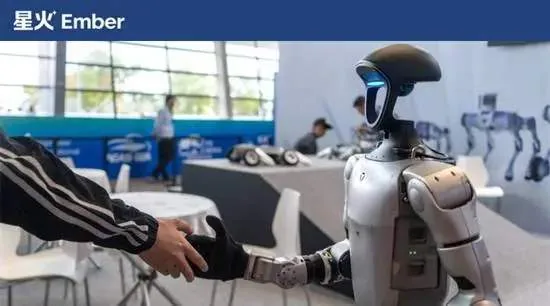
Let's get one thing straight: Unitree (宇树科技) is having a moment. The Hangzhou-based robotics company went from "that robot dog company" to "wait, they make humanoids now?" with the H1 and the smaller, more affordable G1. Their videos consistently go viral on Douyin (抖音) and Bilibili (B站) — robots doing backflips, robots pouring tea, robots staring into the middle distance with vaguely menacing calm. The comment sections are always the same mix of awe, anxiety, and jokes about the robot uprising.
But here's what the 2.1 million clicks on this headline actually reveal: there's a growing gap between watching a robot video and owning a robot. And Chinese netizens know it.
So who is buying them? The answer is layered, slightly depressing, and very 2024.
The short answer: not you, not me, and definitely not that guy commenting "shut up and take my money."
Unitree's G1, their "consumer-friendly" humanoid, starts around ¥99,000 RMB (roughly $13,700 USD). The H1? That's enterprise territory — think ¥500,000 to ¥800,000 and up depending on configuration. These are not impulse purchases. You can't put one in your shopping cart on Pinduoduo (拼多多) with a group-buy discount.
The actual buyer profile breaks down into three camps:
Camp 1: The Research Labs (obviously but also not boring)
Chinese universities are snapping these up. Tsinghua, Zhejiang University, and a dozen others are building robotics research programs that need hardware now, not in three years when they've built their own from scratch. Unitree's appeal is simple: it's relatively affordable, it's open-source friendly, and — critically — it's available. Unlike Boston Dynamics, which has export restrictions and eye-watering price tags, Unitree will actually sell you one and answer your emails.
But here's the interesting part: it's not just the elite schools. Second and third-tier universities are buying Unitree robots too, often with government funding earmarked for AI and robotics education. China's Ministry of Education has been pushing robotics literacy hard, and regional governments are happy to fund "innovation labs" that look great in press photos. The robot might end up gathering dust, but the purchase was made. This is a real market.
Camp 2: The Show-Off Companies (the real volume driver)
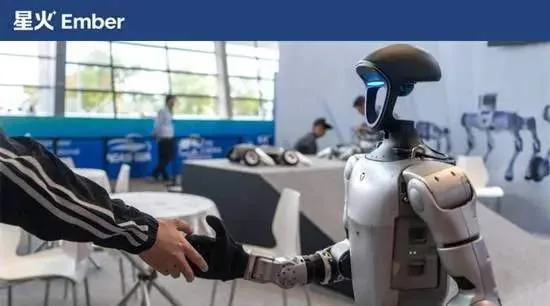
This is where it gets spicy. A significant chunk of Unitree's humanoid sales are going to companies that want a robot in their lobby. Not to do anything specific — just to be there. Hotels, tech companies, real-estate developers showing off new "smart" properties. The robot greets visitors, maybe does a little wave, possibly serves water with mixed success. It's a living, breathing (well, computing) status symbol.
One Shenzhen tech-company CEO reportedly bought two H1 units just to have them stand at the entrance of his company's annual meeting. They did nothing useful. They looked incredible. The Douyin videos from employees got millions of views. Was it a ¥1.6 million marketing expense? Absolutely. Was it worth it? The company's brand awareness tripled that week.
This is the Chinese consumer-internet mindset applied to hardware: if it generates content, it generates value. The robot doesn't need to be productive — it needs to be postable.
Camp 3: The Weird Rich Guys (the wildcard)
Yes, there are individual wealthy Chinese consumers buying humanoid robots. No, they are not using them for practical purposes. One tech founder in Beijing reportedly bought a G1 to "help around the house." It currently stands in his study and occasionally falls over. He seems delighted.
Another buyer, a livestream-commerce entrepreneur in Hangzhou, uses his Unitree robot as a co-host on his stream. The robot doesn't say anything useful — it mostly exists as a conversation piece. Viewers tune in to see if it'll malfunction. Sometimes it does. The comments go wild. Revenue goes up.
This is the cultural moment we're in: robots as personality, robots as content, robots as vibes.
What this headline really means
The fact that 2.1 million people clicked on "Who's buying Unitree robots?" tells us something specific about the Chinese tech psyche right now. People aren't asking if humanoid robots are good or useful — they're past that. They've accepted that the technology exists and is impressive. The real question is about access. About who gets to participate in the future and who just watches it on their phone.
There's a class anxiety baked into this curiosity. The robot videos are everywhere. Everyone's seen them. But actually having one? That's a different world. The headline is really asking: is this thing for us, or is it just another fancy toy for people with too much money?
The answer, right now, is somewhere in between. Unitree is genuinely trying to make humanoids more accessible — the G1's price point was chosen specifically to be "within reach" for serious buyers. But "within reach" still means six figures in RMB, which is firmly in rich-person territory for individual consumers.
Here's my take: the question will change within two years. Instead of "who's buying them," the trending headline will be "what is your robot actually doing?" And that's when it gets interesting. Because right now, most of these robots are expensive conversation pieces. The real revolution starts when someone figures out a use case that's worth the price tag without the Douyin views.
Unitree is betting that moment comes soon. The 2.1 million people asking about buyers suggest the audience is ready. Now someone just needs to give them a reason to open their wallets that doesn't involve making their friends say "wow" at a dinner party.
The robots are here. The buyers are early. The revolution is pending. Stay tuned.