China's Robot Craze Is Getting Unhinged — In the Best Way
The trending headline on Toutiao (今日头条) — 「中国机器人现在有多疯狂」 — translates roughly to "Just how crazy are China's robots right now?" And the answer, after scrolling through approximately 47 viral clips of machines doing things that feel illegal, is: very, extremely, concerningly crazy.
Not the creepy Boston Dynamics dog-with-a-snake-face kind of crazy. The "wait, that $16,000 humanoid just did a backflip and is now serving me hotpot" kind of crazy.
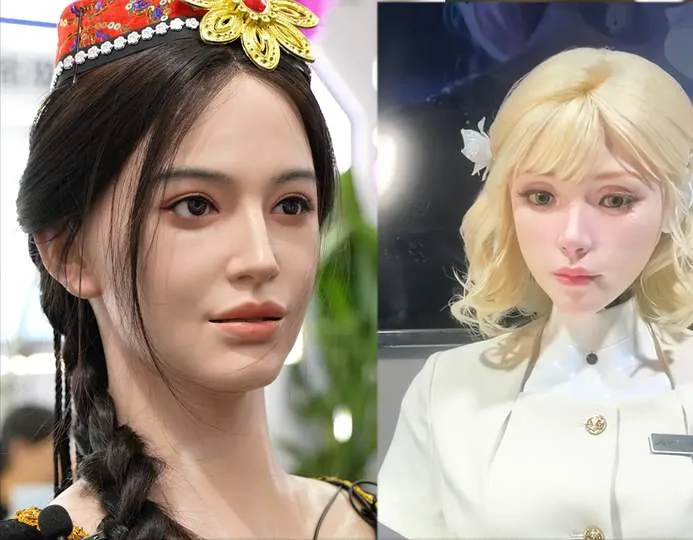
Here's the situation: China's humanoid robot scene has gone from "interesting government initiative" to full-blown consumer spectacle in roughly 18 months. And unlike the AI model wars where DeepSeek (深度求索) shocked everyone by being good and cheap, the robot thing is shocking because it's becoming entertainment.
Unitree is the Main Character
Unitree (宇树科技) — the Hangzhou-based company that makes those robot dogs you've seen on Douyin (抖音) doing yoga — has essentially become the face of this moment. Their H1 humanoid isn't just walking lab corridors anymore. It's appearing on TV shows. It's in commercials. Their cheaper G1 model starts at around $16,000 and the internet treats each new demo like a Taylor Swift album drop.
When Unitree posted footage of the H1 doing a coordinated dance routine recently, the clip racked up millions of views across Weibo (微博) and Bilibili (B站) within hours. Comments ranged from "the future is now" to "this is how the robot war starts" — which, honestly, is the most on-brand Chinese internet reaction possible.
But here's what's actually interesting: Unitree is not treating this like a research project. They're treating it like consumer electronics. The price points, the social media strategy, the merch-adjacent hype cycle — it's closer to how Pop Mart (泡泡玛特) built Labubu mania than how a defense contractor behaves.
Everyone Wants In
The robot fever isn't just Unitree. Fourier (傅利叶) has been pushing their GR-1 humanoid as a general-purpose platform. Agibot (智元), founded by a former Huawei exec, is building what they call "embodied AI" robots and has raised serious money from the usual suspects. UBTech (优必选), the OG of Chinese humanoid robotics, has Walker robots that have been deployed in actual factory settings — not just demo floors.
Then there's the newer entrants: EngineAI, Booster, Robot Era — companies most Western observers haven't heard of but that are generating genuine buzz on Chinese social platforms. Robot Era showed off a humanoid doing calligraphy recently. Calligraphy. The symbolism wasn't subtle.
And XPeng's IRON robot — yes, the same XPeng (小鹏) that makes cars, but this is their humanoid division, not the auto side — has been spotted in their factories doing actual assembly work. Not a demo. Not a video shoot. Real production line stuff.
Why This Hits Different in China
Three things are colliding simultaneously:
1. The supply chain advantage is real. China makes most of the world's actuators, sensors, battery cells, and precision components. Building a humanoid in Shenzhen is logistically different from building one in Boston. The iteration speed is brutal.
2. Consumer appetite for tech spectacle is bottomless. The same audience that made Douyin livestream-commerce a $200+ billion industry will absolutely watch a robot fold laundry for 45 minutes. Chinese platforms reward visual novelty, and robots are extremely visual novelty.
3. The AI brain problem is getting solved. With models like DeepSeek and Qwen/Tongyi (通义千问) from Alibaba (阿里巴巴) improving rapidly, the "make the robot actually smart" challenge feels less insurmountable. Chinese robotics companies aren't just building bodies anymore — they're building bodies plus connecting them to increasingly capable domestic AI models.
The Skeptical Take (Because Someone Has To)
Look, I love a good robot dance video as much as the next terminally online person. But the hype-to-reality ratio right now is... aggressive. Most of these humanoids still struggle with basic tasks in unstructured environments. The "robots in factories" headlines often involve highly controlled, pre-mapped spaces. And the consumer market for a $16,000 humanoid that can walk and wave but can't reliably fold your laundry is, to put it diplomatically, nascent.
There's also the investment froth factor. Chinese VCs, burned by the tech crackdown and looking for the next big narrative, have piled into robotics with the kind of enthusiasm that usually precedes a shakeout. Not every company currently raising at a $1 billion valuation will survive.
But here's the thing: the spectacle itself matters. China's robot moment is doing what the EV moment did five years ago — creating a visible, viral, consumer-facing narrative that normalizes the technology, builds brand awareness, and trains the public to imagine a future where robots are just... around. In stores. In restaurants. Eventually in homes.
That's the real story behind "中国机器人现在有多疯狂." It's not about whether Unitree's H1 can actually replace a factory worker today. It's about the fact that millions of Chinese consumers are watching robot content daily, forming opinions, and — crucially — getting excited enough to become early adopters when the products actually deliver.
The robot revolution might not be televised in the West. But in China, it's definitely going viral on Douyin.