China's Chip Darling Gets the *ST Scarlet Letter
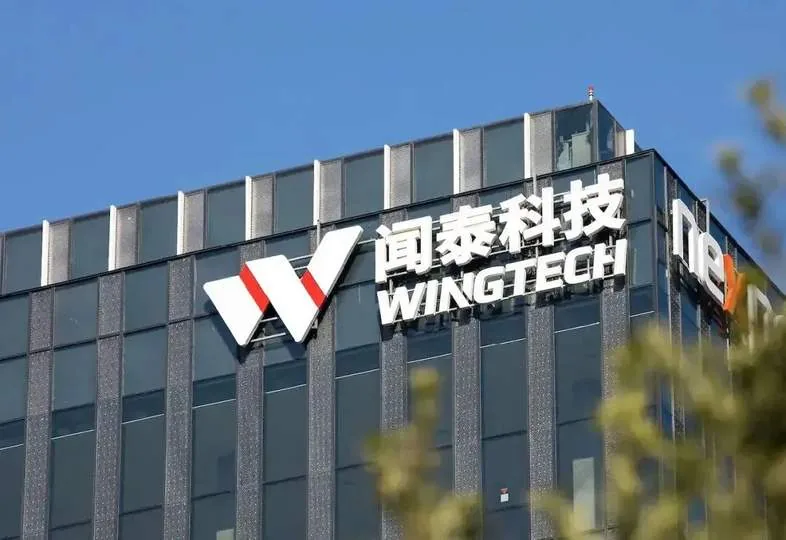
Here's what's dominating Chinese feeds right now: Wingtech Technology (闻泰科技), one of the country's biggest semiconductor and device-manufacturing players, is about to get slapped with the dreaded *ST prefix — becoming *ST Wingtech (*ST闻泰). With nearly 6.7 million heat index points on Toutiao (今日头条), this isn't just financial-nerd news. It's a cultural moment.
What *ST Actually Means (And Why Chinese Netizens Love the Drama)
In China's A-share stock markets, the ST tag is basically a corporate walk of shame. It stands for "Special Treatment" — a regulatory warning label that screams "this company has posted two consecutive years of losses and might get delisted." The asterisk () means they're on the thinnest possible ice. Daily price swings get capped at 5% instead of the usual 10%. Institutional investors start fleeing. Retail traders either panic-sell or YOLO in hoping for a turnaround story.
And Chinese internet culture devours this stuff. The same energy that fuels Douyin (抖音) drama and Bilibili (B站) meme-fests gets directed at corporate flameouts. Toutiao comment sections become gladiator arenas of hot takes, I-told-you-sos, and gallows humor about "value investing." The 6.7 million heat score tells you this crossed from finance-bro territory into mainstream watercooler conversation.
Wingtech's Wild Ride: From ODM King to Cautionary Tale
Wingtech wasn't some random small-cap player. They were the Chinese semiconductor success story of 2019-2020, when they pulled off the acquisition of Nexperia (安世半导体) — the former NXP standard-products division — for about $3.6 billion. Suddenly a Chinese company controlled a serious global chip footprint. The stock went vertical. Market cap briefly topped 200 billion yuan ($28 billion). They were making components for phones, cars, IoT devices — the works.
But here's where it gets interesting for our China-tech-watching audience: Wingtech sat at the intersection of two massive Chinese industrial bets — semiconductor self-sufficiency and smart-device manufacturing. They were supposed to prove that Chinese companies could move up the value chain from assembly to actual chip design and production.
Instead? Gross margins compressed. The global semiconductor cycle turned brutal. Their ODM (original design manufacturing) business — making phones and gadgets for other brands — became a low-margin bloodbath. The Nexperia integration proved harder than expected. And now the bill has come due.
What This Reveals About China's Chip Ambitions
Here's my take, and it's not going to be popular in certain WeChat (微信) group chats: Wingtech's *ST moment is a microcosm of the broader reality check hitting China's semiconductor push.
Yes, Chinese AI chips are making real progress — Huawei Ascend (华为昇腾) processors are genuinely competitive in training clusters, Cambricon (寒武纪) keeps plugging away, and Moore Threads (摩尔线程) is inching toward usable GPUs. But the foundational semiconductor business — the unglamorous workhorse chips that go into everything from power management to basic signal processing — remains brutally cyclical and margin-thin.
Wingtech tried to be both a chip company AND a device manufacturer AND an acquisition-powered growth story. That's a tough combo in any market. In China's current environment — where consumer electronics demand is soft, export controls complicate advanced-node ambitions, and local governments are pulling back from the blank-check subsidies of the 2020-2021 chip-investment frenzy — it became nearly impossible.
The 6.7 million Toutiao heat isn't just schadenfreude. It's recognition that the "semiconductor fever" of the early 2020s is now meeting reality. Some bets pay off (DeepSeek's 深度求索 recent AI model breakthroughs come from a completely different play on algorithmic efficiency rather than raw silicon). Others don't.
The *ST Effect: Retail Investor Culture Goes Mainstream
What makes this story particularly "qipaobuzz" is how it illuminates Chinese retail investor culture — which has become inseparable from internet culture writ large.
When *ST news hits, Chinese social media explodes with specific rituals:
- Xiaohongshu (小红书) gets flooded with "should I hold or fold" posts featuring aesthetic stock-chart screenshots
- Weibo (微博) trending fills with hot takes comparing the company to other famous *ST flameouts
- Bilibili finance vloggers drop "explain like I'm five" breakdowns that rack up millions of views
- Toutiao comment threads become impromptu support groups for bag-holders
This is Chinese financial literacy meeting meme culture meeting genuine anxiety about wealth preservation in a slowing economy. The *ST designation transforms a boring accounting technicality into mass entertainment — and mass catharsis.
The Bigger Picture: Creative Destruction, Chinese-Style
Here's the contrarian take: Wingtech getting *ST'd might actually be healthy for China's chip ecosystem. The country pumped something like 1.5 trillion yuan ($210 billion) into semiconductor subsidies between 2019-2023. Not all of that was going to produce winners. Market discipline — even painful, public, meme-worthy discipline — is how you sort the real players from the subsidy-chasers.
Wingtech may well recover. *ST companies regularly shed the designation by returning to profitability. Nexperia's underlying business still has real technology and real customers. But the signal has been sent: just being a "national champion" in a strategic sector doesn't immunize you from market gravity.
Meanwhile, the actual cutting edge of Chinese AI — companies like DeepSeek (深度求索), Qwen/Tongyi (通义千问) at Alibaba (阿里巴巴), and Zhipu (智谱清言) — are advancing through software and algorithmic innovation that's somewhat less capital-intensive than building fabs. The smart money in China's AI race has shifted toward models and applications rather than pure silicon plays.
Wingtech's *ST scarlet letter is trending because it's a story Chinese netizens understand instinctively: ambition meeting reality, hype meeting P&L statements, and the peculiar drama of watching a national champion stumble publicly. It's not a tragedy. It's just Tuesday on the Chinese internet.
~6.7 million Toutiao heat index points and counting