BOE's 40B Yuan Day: China's Screen King Ignites A-Shares
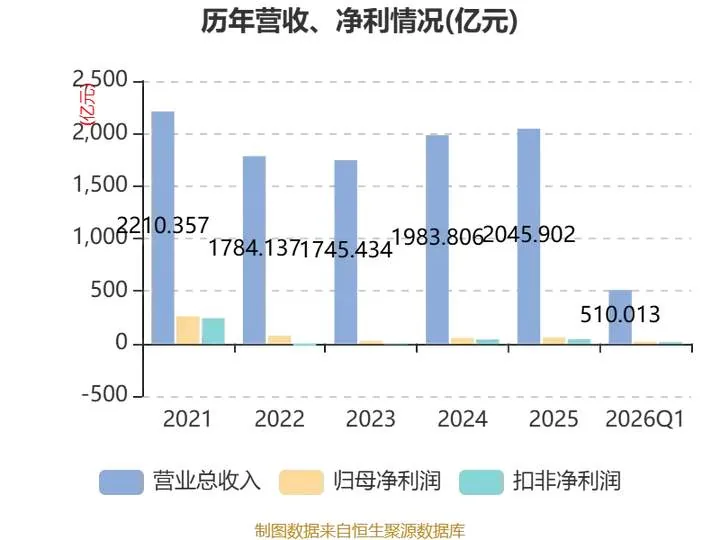
If you blinked, you missed it. BOE Technology (京东方) — the Beijing-based display panel giant that quietly makes the screen in your phone, your tablet, your TV, and probably the monitor you're reading this on — just pulled off something unhinged on the Chinese stock market. In a single trading session, BOE's turnover blasted past 40 billion yuan (roughly $5.5 billion USD), making it the single most-traded stock on the entire A-share market. Not the most-traded tech stock. Not the most-traded manufacturing stock. The most-traded stock, period. Number one out of over 5,000 listed companies.
Let that sink in. Forty. Billion. Yuan. In one day. On a company most Western readers have never heard of — despite the fact they're staring at BOE's products right now.
The Quiet Giant That Makes Everything Glow
BOE Technology Group (京东方科技集团) is the world's largest manufacturer of LCD and OLED display panels. Based in Beijing, the company supplies screens to Apple, Samsung, Huawei, and virtually every major Chinese electronics brand. If you've used a Chinese-made smartphone, laptop, or television in the past five years, there's a statistically overwhelming chance a BOE panel was involved.
For years, BOE was the ultimate "boring" stock. A capital-expenditure monster — pouring billions into factory after factory, grinding down margins, fighting Korean and Japanese panel-makers in a brutal price war for display dominance. Investors yawned. The stock flatlined. It was the kind of name that showed up in industrial-policy white papers but never on anyone's "hot picks" list.
That narrative has collapsed. And the 40-billion-yuan day is the funeral.
Why 40 Billion Yuan? The AI Hardware Supercycle
The surge isn't random. It reflects a structural shift in how Chinese retail investors are thinking about the AI revolution: AI isn't just software. It's hardware. And every piece of AI hardware needs a screen.
Think about the current Chinese tech moment. DeepSeek (深度求索) and Qwen (通义千问) need compute. Huawei Ascend chips need to go into physical devices. The humanoid robots from Unitree (宇树科技) and Fourier (傅利叶) need human-machine interfaces. Smart glasses, AR headsets, AI pins, industrial control panels, next-gen wearables — every single emerging category is a growth vector for advanced display technology. And BOE sits at the intersection of all of them.
Chinese retail investors — the same army of day-traders who rotate between stocks based on Toutiao (今日头条) trending topics and Weibo (微博) sentiment — have connected these dots. They're not buying BOE because they have a poetic attachment to LCD manufacturing. They're buying BOE because it's the picks-and-shovels play for the entire Chinese AI hardware buildout. You don't need to guess which robot wins. You just need to know that every robot needs eyes.
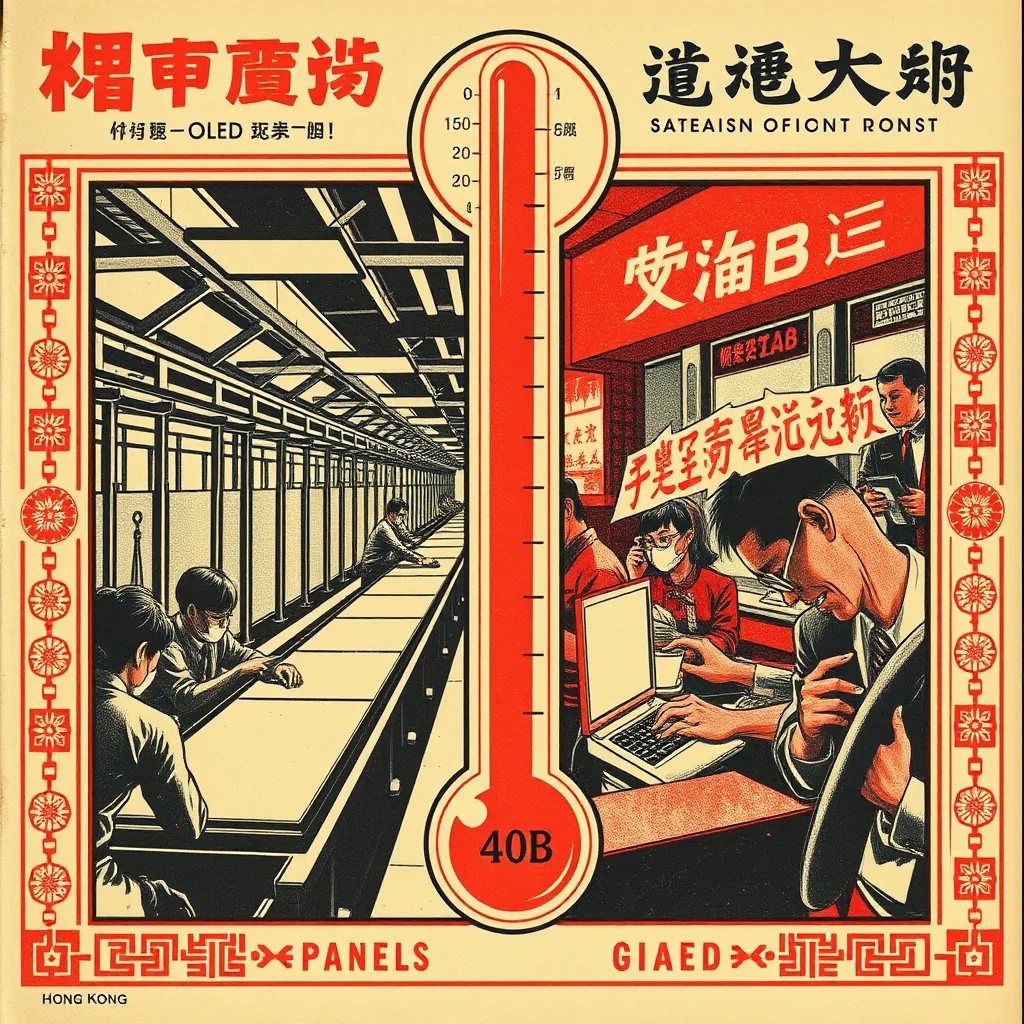
When a stock does 40 billion yuan in volume, it means everyone is trading it — institutions rebalancing, retail punters chasing momentum, quant funds arbitraging the spread. It's the kind of liquidity that turns a stock into a market unto itself. Right now, BOE is the hottest chip on the A-share table.
The Display Wars Are Back — and China Is Winning
There's a geopolitical-adjacent angle here that's impossible to ignore. BOE has been locked in a multi-year war with Samsung Display and LG Display for dominance in OLED — particularly flexible OLED panels used in high-end smartphones and foldables. In 2023, BOE overtook Samsung as the world's largest smartphone OLED panel shipper in multiple quarters. That's a symbolic earthquake: a Chinese company beating Korea at the one thing Korea was supposed to own forever.
Layer on the consumer-electronics refresh cycle — foldable phones, AR glasses, smartwatches, AI-powered home devices — and you have a demand environment that's genuinely bullish for advanced panels. The market is pricing in a multi-year upgrade super-cycle, and BOE is the most obvious beneficiary.
What This Reveals About Chinese Market Culture
Here's the cultural read that matters for qipaobuzz readers: Chinese retail investors are narrative animals. They don't just parse P/E ratios. They chase stories. And the story right now is: China's tech hardware independence is coming, and BOE is the foundation.
This narrative gets amplified on Xueqiu (雪球) — China's investing community, a hybrid of WallStreetBets energy and Seeking Alpha verbosity — and East Money (东方财富), the retail-trading platform that moves markets. When a story catches fire on these platforms, volume follows. The 40-billion-yuan print isn't just a number. It's a sentiment thermometer reading "fever."
The figure also signals liquidity returning to Chinese equities after a brutal multi-year slump. Capital is flowing back into A-shares, and it's flowing into names that represent China's industrial future — not legacy property developers or state-owned banks. BOE is precisely that kind of name: forward-looking, globally competitive, and embedded in the supply chain of everything that matters next.
My Take
BOE isn't going to be the next DeepSeek-style viral sensation. It won't trend on Douyin (抖音) with cute robot demos or benchmark-smashing language models. It's a heavy-industry play in a glamour-tech world.
But that's exactly why the 40-billion-yuan day matters. It tells you Chinese investors are thinking one layer deeper than the obvious AI plays. They're drilling into the supply chain. The screen is the interface between human and machine — and as AI becomes more physically embedded in devices, the companies manufacturing those interfaces become critical infrastructure. BOE isn't just a panel maker anymore. It's the visual layer of China's entire tech stack.
Forty billion yuan says the market already figured that out. The rest of us are just catching up.