Chengdu Rongcheng Crowned Mid-Season Kings of Chinese Soccer
Something unexpected happened on the Chinese internet this week, and no, it wasn't another AI benchmark controversy or a Douyin (抖音) livestreamer melting down. It was something far more primal, far more emotional, and frankly, far more entertaining: Chengdu Rongcheng (成都蓉城) just became the half-season champions of the Chinese Super League (中超) for the first time in club history. And the Chinese internet absolutely lost its collective mind.
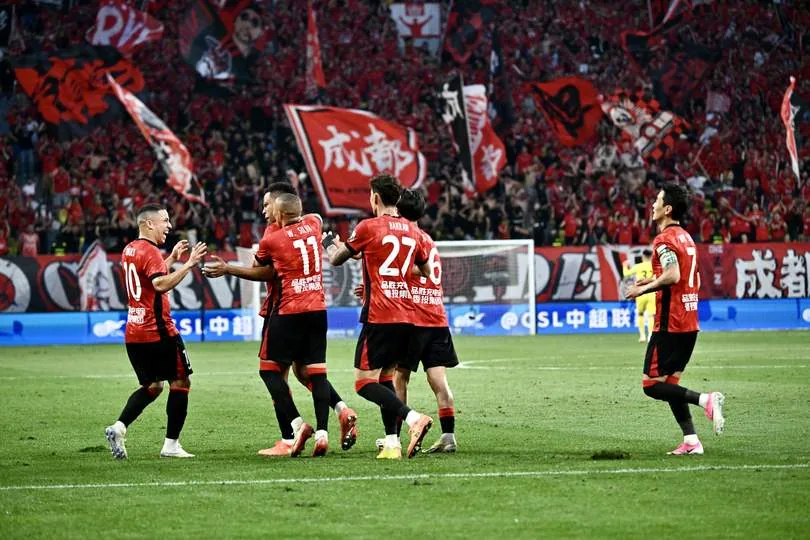
Now, if you're not a follower of Chinese football, let me paint you a picture. The Chinese Super League has spent the last few years in a state of what can only be described as "managed chaos." The golden era of massive foreign signings — think Oscar, Hulk, and various other Brazilians who definitely came for the football and not the eye-watering salaries — that era collapsed spectacularly. Clubs folded. Champions were dissolved. The entire league structure went through what officials politely called "financial rationalization" and everyone else called "we ran out of money."
Enter Chengdu Rongcheng, a club that literally wasn't even in the top flight three years ago. Their rise has been less "carefully orchestrated dominance" and more "chaotic underdog story that scripts itself." Based in Chengdu, the capital of Sichuan province and China's unofficial capital of good food, relaxed vibes, and now apparently competitive football, Rongcheng has captured something that no amount of marketing budget can manufacture: genuine regional passion.
The numbers tell the story. This headline racked up over 1.5 million热度 (hotness points) on Toutiao (今日头条), China's algorithmically-addicted news aggregator that serves as a reasonably accurate barometer of what actual humans in actual Chinese cities care about. That's not AI model launch numbers, but for a domestic sports story in a league that's been written off more times than a bad Weibo (微博) hot take, it's massive.
Here's why this matters beyond the pitch. Chinese sports consumption has undergone a quiet revolution. While everyone was watching Douyin influencers sell lipstick and Bilibili (B站) creators analyze anime, something shifted in how Chinese fans engage with domestic sports. The declining cost of live attendance, the explosion of sports content on short-video platforms, and perhaps most importantly, the search for authentic communal experiences in an increasingly atomized digital society — all of this created fertile ground for a club like Rongcheng to capture hearts.
Chengdu itself deserves credit. The city has spent the last decade cultivating an image as China's most livable major metropolis. It's the land of hotpot (火锅), giant pandas, and a work-life balance that makes Beijing's tech workers weep with envy. The football club has become an extension of that civic identity — passionate but not aggressive, proud but not arrogant, and deeply, profoundly local in a way that resonates across Chinese social media.
The online reaction has been everything you'd expect and more. Douyin filled with fan reaction videos — grown adults crying in stadium stands, groups of friends screaming at television screens in hotpot restaurants, elderly fans who'd waited decades for a competitive Sichuan team. The comment sections became impromptu therapy sessions for long-suffering Chinese football fans. "Finally," wrote one user on Weibo, "something to believe in that isn't an AI chatbot telling me the future."
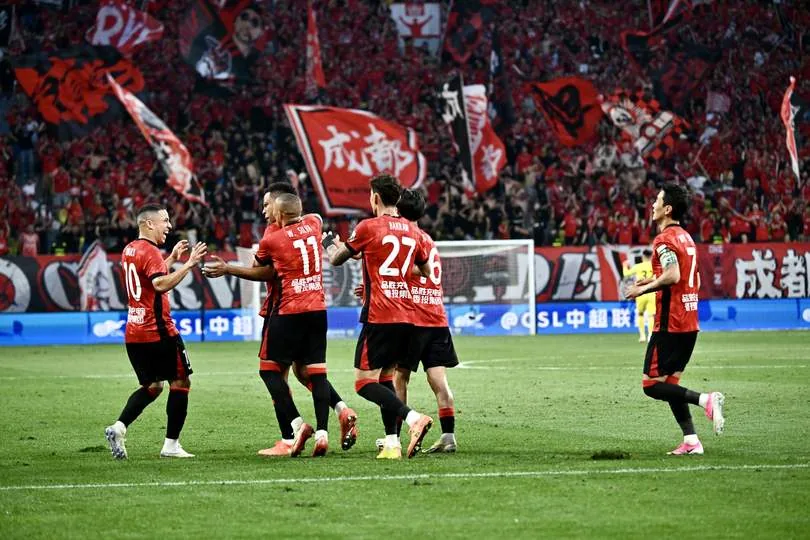
That comment, incidentally, perfectly captures why this story matters for qipaobuzz readers specifically. In a Chinese internet landscape currently dominated by AI model releases, robotics breakthroughs, and platform drama, the emergence of a genuinely grassroots sports narrative feels almost refreshing. It's a reminder that beneath all the tech hype and consumer platform wars, there are still 1.4 billion people looking for something to cheer for on a weekend afternoon.
The business angle is worth noting too. Rongcheng's success has been built on a comparatively sustainable financial model — no reckless spending, no unsustainable wage bills, just smart recruitment and genuine community building. In a league still scarred by the excesses of the Jiangsu Suning era (winners in 2020, dissolved in 2021 — yes, really), this matters. Chinese sports business media have noticed, with several outlets running pieces on whether Rongcheng represents a new template for CSL club management.
The broader cultural implications extend beyond sports. Regional pride in China has found new expression channels through digital platforms, and sports success offers one of the few socially acceptable outlets for competitive civic identity. When Chengdu wins, it's not just a football result — it's a statement that Tier-1 cities don't have a monopoly on excellence, that China's interior provinces can compete at the highest level, and that good things can indeed come from places that aren't Shanghai or Shenzhen.
Looking ahead, the question is whether Rongcheng can maintain this form through the full season. History suggests caution — half-season leads have been squandered before in the CSL, and the pressure will only intensify. But regardless of the final outcome, the cultural moment has already happened. For one week, at least, Chinese social media wasn't arguing about AI models or e-commerce strategies. It was united in celebrating a football club from Sichuan that dared to dream, and that might be the most subversive thing the Chinese internet has done all year.