China's Starship Clone Finally Shows Up to the Party
Over 5.3 million eyes on Toutiao (今日头条) are locked onto a single exploding headline: "China's version of Starship has finally arrived." The platform slapped it with a "depth" label, which is algorithm-speak for "people are actually reading past the headline." And brother, they should.
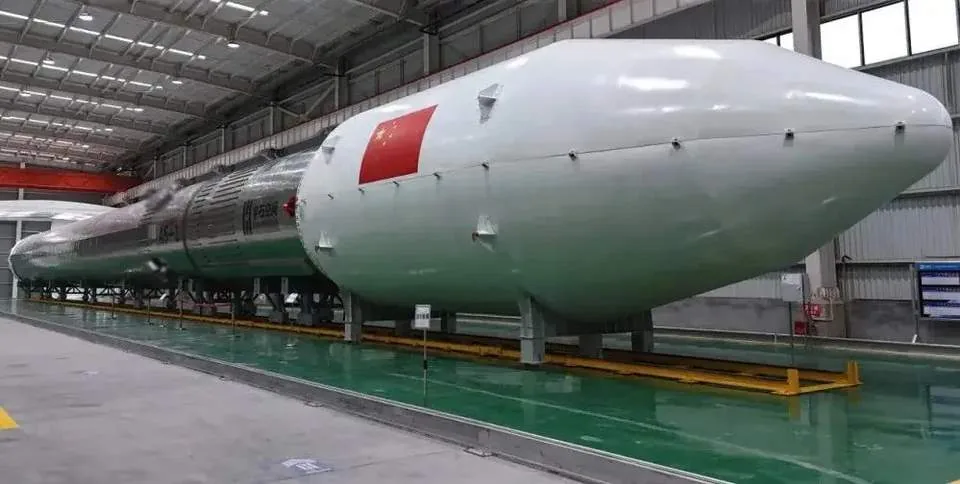
Translation for those who don't speak hype: China finally built its answer to SpaceX's Starship. Cue the collective national flex, the patriotic comment storms, and the inevitable "but can it land?" skepticism from engineers who actually know things.
Here's the thing about Chinese internet hype — that headline is doing Olympic-level heavy lifting. "中国版星舰" (China's Starship) is pulling the same trick as calling every Chinese AI model "the GPT-killer." It's aspirational branding before it's engineering reality. It's the tech equivalent of your friend who says they're "basically a chef" because they nailed fried rice once.
What We're Actually Talking About
The "Chinese Starship" refers to China's growing fleet of reusable heavy-lift rockets being developed by a mix of state giants and hungry startups. The contenders include LandSpace (蓝箭航天), which already flew a methane-powered Zhuque-2; Space Pioneer (天兵科技), building reusable vehicles; Deep Blue Aerospace (深蓝航天), testing vertical landing tech; and iSpace (星际荣耀), another private player in the reusable rocket game.
And looming above them all is CASC (中国航天科技集团), the state behemoth developing the Long March 9 — a super-heavy lift rocket that's been called China's Saturn V, but is now getting the Starship comparison because that's the benchmark that moves metrics in 2025.
The "finally" in that headline is carrying emotional baggage. It's the same energy as "finally" when your team scores after being down 3-0. The subtext: we've been watching SpaceX stick landings and catch boosters with chopstick arms for years, and China is ready for its close-up.
Why This Matters Beyond Rockets
Here's what's actually revealing: the framing. Calling it "China's Starship" rather than giving it a Chinese name is significant. It's an acknowledgment that SpaceX set the benchmark and China is playing catch-up on a very public scoreboard.
This is different from how Chinese tech usually gets framed. DeepSeek (深度求索) gets called "China's AI champion." Unitree (宇树科技) gets called "China's robotics powerhouse." But this rocket? It's defined by what it's chasing, not what it is. That's either humility or marketing savvy — probably both.
The Hype Cycle Is the Real Story
On Weibo (微博) and Douyin (抖音), the reaction splits into three familiar camps:
The Proud Patriots: "China can do anything SpaceX can do, and cheaper." The Skeptics: "Let's see it land before we celebrate." And the Memelords, posting SpaceX explosion compilations with captions like "inspiration" and getting thousands of likes.
The comment sections reveal something genuine about Chinese tech culture in 2025: growing sophistication. Five years ago, any Chinese space achievement would get uncritical praise. Now, commenters ask about reusability rates, payload capacity, and flight records. They've been burned by overpromises before.
The Numbers Game
SpaceX has launched Starship multiple times with progressively successful flights. The mechanical arm catch was watched by millions globally. China's answer hasn't flown yet in a comparable configuration.
But China's commercial space sector raised over $2 billion in 2024 alone. Government contracts are flowing. The talent pipeline from aerospace universities is massive. And the political will to compete in space shows zero signs of wavering.
What This Reveals About Chinese Tech Culture
Three things worth noting.
First, the comparison frame is permanent. Chinese tech no longer exists in a vacuum. Every achievement is measured against global benchmarks. "China's Starship" not "China's new rocket." This is confidence and anxiety simultaneously.
Second, the speed obsession is real. The "finally" implies frustration that this took too long. Chinese internet culture has zero patience for being second. The same impatience driving weekly AI model releases is now aimed at rockets.
Third, commercial space is the new EV scene. Remember how every Chinese EV company was going to "kill Tesla"? Now every rocket startup is going to "beat SpaceX." The hype cycle is identical: massive funding, bold claims, messy reality check, inevitable consolidation.
My Take
China will build something Starship-like. The engineering talent and funding are there. The question is whether it matters the same way. SpaceX's advantage isn't just engineering — it's operational tempo. They launch, explode, learn, and relaunch in weeks. That iteration speed is cultural, not just technical.
But dismissing Chinese space tech would be foolish. The same pattern we saw in AI — where DeepSeek went from "China's trying" to "wait, this is actually competitive" — could play out in rockets.
The real story isn't the rocket. It's the 5.3 million people who clicked that headline. That's a nation paying attention to its tech frontier, measuring itself against the world's best, and demanding more. Whether that produces a Starship killer or a very expensive fireworks show remains to be seen. Either way, the livestream will break records.