When Celebrity Health Becomes Content: Du Chun's Wife Shares Lung Surgery
The Chinese internet has a complicated relationship with celebrity vulnerability. One minute you're scrolling through perfectly curated lifestyle content on Douyin (抖音), the next you're deep inside someone's actual medical history — and honestly, you didn't ask to be there, but now you can't look away.
That's exactly what happened when Wang Can (王灿), wife of actor Du Chun (杜淳), decided to share with her followers that she had undergone surgery to remove part of her lung. The headline —「杜淳妻子王灿自曝切除一片肺」— rocketed to the top of Toutiao (今日头条) with over 2.6 million engagement signals, proving once again that nothing drives traffic quite than a celebrity health scare served fresh.
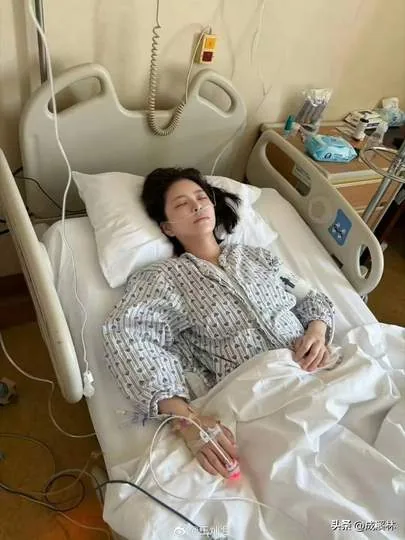
Let's be clear about what's happening here. Wang Can isn't just any celebrity spouse — she's built her own brand as a lifestyle influencer, someone whose content lives in that comfortable space between aspirational and relatable. She shares parenting moments, beauty routines, and glimpses into what appears to be a charmed life with one of China's more recognizable actors. So when she pivots from skincare recommendations to discussing lung surgery, the whiplash is real.
The details, as shared across various platforms including Weibo (微博) and Xiaohongshu (小红书), suggest this was a necessary medical procedure — not something cosmetic or elective. But in today's content economy, the why matters less than the how it's shared. And that's where this story gets interesting.
We're living through a moment where Chinese celebrities and influencers are increasingly using personal health narratives as content. Sometimes it's genuine awareness-raising. Sometimes it's sympathy farming. Most often, it's somewhere in the gray zone — real health experiences packaged for maximum engagement.
Wang Can's revelation follows a pattern we've seen repeatedly on Chinese social media. A celebrity or public figure shares a health struggle. The post goes viral on Toutiao. Comment sections fill with a mix of genuine concern, medical advice from people who definitely aren't doctors, and the inevitable skeptics asking why this needed to be shared publicly at all.
The engagement numbers tell the story. Over 2.6 million signals on Toutiao alone — that's not casual interest. That's a nation of netizens who have developed an appetite for this specific type of content. It sits at the intersection of health awareness, celebrity worship, and that uniquely modern desire to feel connected to people we've never met.
What makes the Chinese internet's relationship with celebrity health content particularly fascinating is how it interacts with the country's healthcare anxieties. In a society where medical costs remain a significant concern and hospital experiences can be stressful, there's something both comforting and voyeuristic about watching someone with resources navigate health challenges. It's medical tourism for the scroll-addled mind.
The comment sections on these posts reveal a lot about current Chinese internet culture. You'll find people sharing their own similar medical experiences — creating impromptu support communities. You'll find traditional medicine advocates suggesting alternatives. You'll find the conspiracy theorists. And you'll find the brutally honest ones asking whether sharing such intimate health details is really necessary or just another engagement strategy.
Here's my take: Wang Can has every right to share her health journey. Whether it's therapeutic for her, educational for others, or just content strategy — it's her lung, her story, her choice. But we should probably acknowledge that the line between authentic vulnerability and content optimization has gotten very blurry.
The timing matters too. Health content tends to spike in engagement during certain periods — post-holiday health scares, seasonal illness waves, and whenever a major public health discussion is happening. Content creators, even those dealing with genuine medical situations, are often subconsciously aware of these cycles.
What's particularly interesting is how Toutiao's algorithm treats this kind of content. Health stories involving celebrities get boosted significantly — the platform knows that combining name recognition with medical drama is engagement gold. It's not quite clickbait, because the stories are real, but it's definitely algorithmically optimized vulnerability.
The broader trend is worth watching. As Chinese social media platforms continue to compete for attention, personal health narratives are becoming increasingly valuable currency. We're seeing everyone from top-tier celebrities to mid-tier influencers sharing everything from surgery photos to diagnosis stories. It's creating a strange new normal where your followers expect access to your medical records alongside your vacation photos.
For Wang Can specifically, this revelation humanizes her in a way that perfectly curated lifestyle content never could. It's harder to feel jealous of someone's seemingly perfect life when you know they're also dealing with lung surgery. Whether that's intentional branding or genuine sharing is almost beside the point — the effect is the same.
The Chinese internet will move on from this story quickly. Tomorrow there'll be another celebrity health scare, another viral revelation, another moment of collective digital empathy. But the pattern is clear: in the attention economy, vulnerability is currency, and health is the most valuable vulnerability of all.
Whether that's healthy for anyone — the sharers or the scrollers — remains very much an open question.