Meituan's $700M Quarterly Burn: The Price of Empire
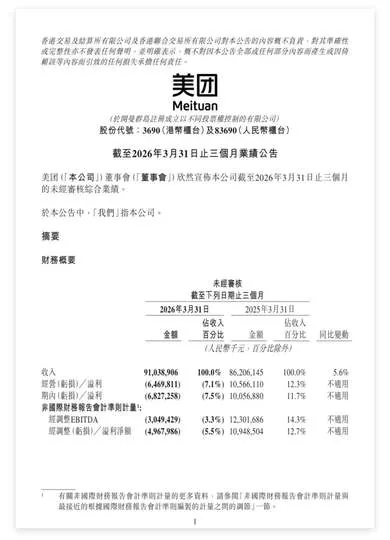
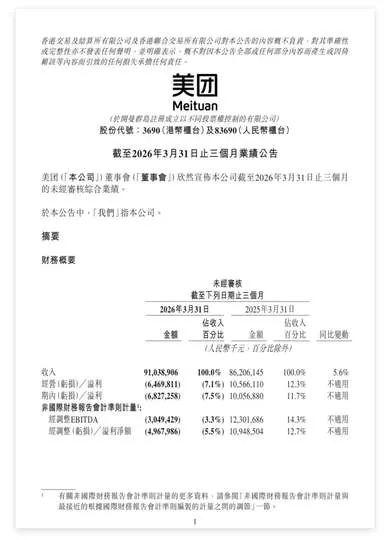
So Meituan (美团) — China's everything-app for food delivery, hotel bookings, bike-sharing, and about 47 other services you didn't know you needed — just posted a first-quarter loss of 4.97 billion yuan. That's roughly $700 million USD. Gone. Poof. In three months.
The hot-take machine on Toutiao (今日头条) is humming with nearly 900,000 engagements on this single topic, and the label says "interpretation" — meaning everyone's scrambling to explain what it actually means.
Here's my take: it means the great Chinese tech profit party is over, and the hangover is spectacular.
Let's Talk Numbers
4.97 billion yuan. That's not a typo. Meituan — the company that literally delivers your midnight xiaolongxia (小龙虾, crayfish) cravings to your door in 28 minutes — burned through enough cash to buy a small island nation. Or, more relatably, about 25 million of those crayfish delivery orders.
But here's the thing everyone's missing: this isn't incompetence. This is strategy by conflagration.
The Empire Logic
Meituan operates on a simple principle that would make any MBA weep: if you're not losing money on something, you're not trying hard enough. They're in approximately every local services business in China. Food delivery? Check. Restaurant reservations? Check. Movie tickets? Check. Beauty salon bookings? Check. Grocery delivery via Meituan Maicai (美团买菜)? Check. Shared bikes that litter every sidewalk from Beijing to Shenzhen? You bet.
Each of these verticals is a money pit disguised as a service. The play has always been: dominate first, monetize... eventually. Maybe. Hopefully.
The problem is that "eventually" keeps getting pushed further into the future because competition keeps showing up uninvited to the party.
The Douyin Problem
Here's what's really eating Meituan's margins: Douyin (抖音) decided it wanted to be in the local services game too. ByteDance's (字节跳动) short-video behemoth has been aggressively pushing into food delivery and restaurant deals, leveraging its algorithmic godhood to redirect hungry eyeballs away from Meituan's tried-and-true platform.
When a company with Douyin's engagement metrics — we're talking hundreds of millions of daily active users who already open the app 47 times a day — decides to compete with you, your margins are going to feel it. Meituan has had to pour money into subsidies, merchant acquisition, and user retention to defend its turf.
This is the Chinese tech way: everyone invades everyone else's lane constantly. Tencent (腾讯) does payments, payments companies do lending, lending apps do... food delivery? The boundaries don't exist anymore. It's all just a war for screen time and transaction volume.
The Bigger Picture: End of the Growth-at-All-Costs Era
Meituan's loss also reflects something deeper happening across China's consumer internet landscape. The era of unchecked expansion is colliding with economic reality.
Consumer spending in China isn't what it was in 2019. People are more price-sensitive. The county-tier (县域) markets that platforms once saw as blue oceans are proving harder to crack than expected. And the regulatory environment, while thawing from the deep freeze of 2021-2023, hasn't returned to the Wild West days.
Meituan's response has been to invest in efficiency — better algorithms, drone delivery trials, automated warehouses. They're betting that technology will eventually squeeze margins out of businesses that have traditionally been labor-intensive and low-margin by nature.
It's a bet that could work. Or it could be the world's most expensive science experiment.
What the Toutiao Commentariat Thinks
The Chinese internet's reaction to this loss has been fascinatingly divided. One camp says Meituan is building infrastructure that will be irreplaceable — the rails on which China's local commerce runs. The other camp says it's just another tech company addicted to VC-era growth metrics in a world that no longer rewards them.
Both are probably right.
The truth is Meituan provides services that have become genuinely essential to urban Chinese life. When your entire business model depends on a single app to feed you, entertain you, and get you from point A to point B, that app has leverage. The question is whether leverage translates to profitability before the money runs out.
The AI Angle Nobody's Talking About
Here's what I find most interesting: Meituan has been quietly investing in AI to optimize its massive logistics network. Route optimization, demand prediction, automated dispatch — these are AI problems hiding in plain sight within Meituan's operations. The company processes millions of orders daily, each one generating data that could train models to squeeze out incremental efficiency gains.
If Meituan cracks the code on AI-driven logistics optimization, it could fundamentally change the unit economics of food delivery and local services. That 4.97 billion yuan loss might look very different in retrospect — either as a costly mistake or as the price of building the training data moat.
Bottom Line
Meituan's quarterly loss isn't a crisis — it's a statement. The company is choosing to invest (and defend) rather than profit. Whether this bet pays off depends on whether Chinese consumers keep ordering, whether Douyin's challenge proves to be a flesh wound or a mortal blow, and whether AI can finally make food delivery profitable.
Place your bets. But maybe don't order the crayfish at 2 AM. Your wallet — and Meituan's balance sheet — will thank you.