China's Wolf Warrior Tells Security to Stop Shoving Fans
Here's the viral moment that broke Chinese social media this week: action superstar Wu Jing (吴京) — the man behind the Wolf Warrior (战狼) franchise that defines modern Chinese patriotism — was caught on camera telling his own security detail to stop pushing fans who'd gathered to see him.
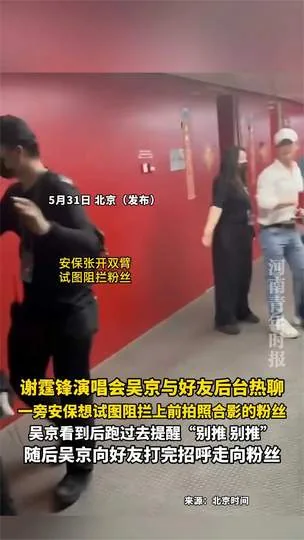
The clip, which exploded across Toutiao (今日头条) with nearly 1 million engagements, Douyin (抖音), and Weibo (微博), shows the 50-year-old martial artist-turned-actor walking through a crowd while oversized bodyguards aggressively shove back enthusiastic fans. Wu Jing visibly gestures at his security team, clearly saying something to the effect of: don't push them.
Simple. Human. And in today's celebrity ecosystem, apparently revolutionary.
Why This Hit Different
To understand why this 15-second clip detonated across the Chinese internet, you need to understand the state of celebrity-fan relations in 2024 China. The country's entertainment industrial complex has developed an increasingly militarized approach to crowd control — phalanxes of burly security guards in black, earpieces wired, shoving anyone who gets within a three-meter radius of whatever star is gracing a mall appearance or airport walkway.
It's become a status symbol. The bigger your security entourage, the more important you must be. Chinese netizens have coined terms for this phenomenon — 明星排场 (celebrity spectacle/entourage) — and they're increasingly sick of it.
Wu Jing's moment went viral precisely because it was the anti-diva move. Here's China's most bankable action star — his films have grossed over 20 billion RMB at the Chinese box office — actively checking his own protection detail for being too rough with ordinary people. The contrast was electric.
The Douyin Commentary Industrial Complex
Within hours, the clip spawned thousands of reaction videos and commentary clips across Chinese platforms. On Bilibili (B站), video essays dissecting the moment racked up hundreds of thousands of views. On Xiaohongshu (小红书), users shared their own encounters with celebrity security teams — a surprising number of which painted a grim picture.
One viral comment that kept getting reposted: "现在的明星保镖比明星还像明星" — "Nowadays celebrity bodyguards act more like stars than the stars themselves."
Another popular take: "吴京是唯一一个戏里战狼戏外也是真男人的" — "Wu Jing is the only one who's a Wolf Warrior on screen and a real man off it too."
The moment also reignited discussions about a 2023 incident where a minor celebrity's security team knocked over a child at an airport, plus countless other clips of aggressive bodyguards pushing, shoving, and occasionally striking fans who were often doing nothing more than holding up phones.
What This Reveals About Chinese Celebrity Culture
China's entertainment industry has been through a brutal reckoning over the past few years. The "fan economy" (饭圈经济) that once fueled astronomical earnings for idols and their agencies got hit with regulatory crackdowns. Tax evasion scandals took down major stars. The whole ecosystem contracted.
Yet the security entourage culture persisted — arguably even intensified as celebrities became more paranoid about crowd interactions in the post-COVID era. The irony is that most of these fans aren't threats. They're young women holding phones and maybe a poster, hoping for a photo of their idol walking through an airport terminal.
Wu Jing occupies a unique position in Chinese pop culture. He's not a pretty-boy idol — he's a rugged, self-made action star who built his career through genuine martial arts training and grit. His Wolf Warrior 2 (战狼2) became the highest-grossing Chinese film ever upon release, earning 5.68 billion RMB. He represents a different model of stardom — one where you earned it through craft rather than manufactured appeal.
That's why this moment resonated beyond simple celebrity gossip. It became a referendum on two Chinas: the entitled, bubble-wrapped celebrity class versus the people who actually buy the tickets and stream the content.
The Numbers Don't Lie
On Toutiao alone, the story generated nearly 990,000 hot-board points — putting it alongside major national news stories and AI breakthroughs for the day. On Weibo, related hashtags accumulated over 200 million reads. The comment sections were remarkably uniform in their sentiment: approval for Wu Jing, disgust with the security industrial complex.
This isn't just about one actor being decent. It's about a Chinese public that's increasingly intolerant of performative wealth and status displays. The same energy that fuels criticism of extravagant livestreamers and over-the-top brand events is now being directed at celebrity bodyguard culture.
The Bigger Picture
China's consumer internet has always had a complicated relationship with celebrity culture. Platforms like Douyin and Xiaohongshu need stars to generate engagement and sell products. But the comment sections reveal a public that's increasingly skeptical of unearned privilege.
Wu Jing's moment works because it demonstrates that real power — the kind earned through decades of work and billions of RMB in box office returns — doesn't need to be performed through aggressive security theater. The most confident person in the room doesn't need bodyguards shoving people away.
For a Chinese internet that's been bombarded with stories of entitled behavior from minor celebrities and influencers, this was a reminder that decency can still go viral. In an attention economy where outrage generates clicks, sometimes the most powerful content is simply a famous person telling their staff: be kind.
That's the Wolf Warrior China actually wants.